
Best Spine Surgeon in Vadodara Explains Sciatica: The Ultimate Relief Guide
Have you ever felt a sudden, sharp, electric-like pain shooting from your lower back, deep into your buttock, and all the way down your leg? If so, you might be one of the millions of people worldwide suffering from a condition known as sciatica.
This intense nerve pain can make even the simplest daily activities—like sitting in a chair, walking down the street, or driving to work—feel absolutely agonizing. The good news is that you do not have to live with this debilitating pain forever.
If you are a resident of Central Gujarat looking for answers, finding the best spine surgeon in Vadodara is your first step toward true healing. Vadodara has evolved into a powerhouse for advanced neurological and orthopedic care, offering patients world-class diagnostics and minimally invasive treatments right in their own backyard.
In this comprehensive, easy-to-understand guide, we will break down exactly what sciatica is, why it happens, and how it can be successfully treated. Whether you are exploring home remedies or advanced surgical options, this article is designed to empower you with the knowledge you need to reclaim your active, pain-free life.
Table of Contents
-
What is Sciatica? A Simple Breakdown
-
The Anatomy of the Sciatic Nerve
-
Top Causes: Why is Your Sciatic Nerve Screaming?
-
7 Unmistakable Symptoms of Sciatica
-
Why Consult a Spine Specialist in Vadodara?
-
Comprehensive Spine Treatment in Vadodara: Non-Surgical Options
-
Advanced Surgical Solutions for Sciatica Relief
-
Recovery & Rehabilitation: Your Path to a Pain-Free Life
-
Frequently Asked Questions (FAQs)
-
Conclusion and Next Steps
1. What is Sciatica? A Simple Breakdown
Before we look into treatments, it is crucial to understand what sciatica actually is. Many people mistakenly believe that sciatica is a specific medical diagnosis or a disease.
In reality, sciatica is a symptom of an underlying medical problem. It is a term used to describe a specific pattern of nerve pain.
When one of the nerve roots in your lower spine becomes compressed, irritated, or pinched, it sends distress signals down the pathway of the nerve. This results in the classic radiating pain that characterizes the condition.
Because it is a symptom rather than a root cause, finding long-term relief requires a medical professional to identify exactly why the nerve is being pinched in the first place.
2. The Anatomy of the Sciatic Nerve
To truly understand this condition, we need to look at the anatomy of the human body. The sciatic nerve is a remarkable structure.
It holds the title of being both the longest and the thickest nerve in the entire human body. It is formed by the union of five separate nerve roots that exit from your lower spinal cord (specifically, the lumbar and sacral regions of the spine).
-
The Pathway: Once these five nerve roots bundle together, they form the thick sciatic nerve, which is about as wide as a human thumb.
-
The Journey: From your lower spine, the nerve runs deep through the muscles of your buttocks, down the back of your thigh, and all the way down to your heel and the sole of your foot.
Because this nerve is connected to so many different parts of your lower body, a pinch at the very top (in your lower back) can cause severe pain anywhere along its extensive pathway. This is why you might feel pain in your calf or foot, even though the actual problem is located in your spine.
3. Top Causes: Why is Your Sciatic Nerve Screaming?
So, what causes this massive nerve to become compressed? There are several spinal conditions that can lead to sciatica.
Herniated Discs (Slipped Discs) Your spine is made up of individual bones called vertebrae. Between each bone sits a rubbery, jelly-like disc that acts as a shock absorber. As we age, or due to injury, the tough outer layer of this disc can tear. When the soft inner jelly pushes out through the tear, it can press directly against the sensitive sciatic nerve roots.
Spinal Stenosis This condition refers to the unnatural narrowing of the spinal canal. As the canal narrows—often due to age-related wear and tear—the space available for the spinal cord and nerves shrinks. This bony constriction eventually compresses the sciatic nerve.
Bone Spurs (Osteophytes) Conditions like osteoarthritis can cause the bones in your spine to break down. In an attempt to heal itself, your body may grow new, jagged bone formations called bone spurs. If a bone spur grows into the space where the sciatic nerve exits the spine, it will cause intense friction and pain.
Spondylolisthesis This is a condition where one vertebra in your lower back slips out of its proper alignment and slides forward over the bone directly below it. This misalignment can easily pinch the sciatic nerve roots passing through that area.
4. 7 Unmistakable Symptoms of Sciatica
Sciatica rarely happens quietly. The symptoms are usually very distinct and hard to ignore. While the severity can vary from a mild ache to excruciating agony, here are seven unmistakable signs that you are dealing with sciatic nerve compression:
-
Radiating Pain: The hallmark symptom. The pain starts in your lower back or buttock and shoots down the back of one leg.
-
One-Sided Discomfort: Sciatica almost always affects only one side of the body at a time. It is very rare to feel it in both legs simultaneously.
-
Electric Shock Sensations: Many patients describe the pain as a sudden jolt of electricity or a sharp, burning sensation.
-
Worsening Pain with Movement: The pain often spikes dramatically when you cough, sneeze, or sit down for extended periods.
-
Numbness: You may experience a loss of sensation in your affected leg or foot, making it feel like it has “fallen asleep.”
-
Tingling: A persistent “pins and needles” feeling, often localized in the toes or the calf.
-
Muscle Weakness: In severe cases, the compressed nerve cannot transmit signals to your muscles properly, leading to weakness in your leg. You might even experience “foot drop,” where you have trouble lifting the front part of your foot while walking.
If you are experiencing muscle weakness or a sudden loss of bowel or bladder control, this is a severe medical emergency. You must visit a clinic immediately.
5. Why Consult a Spine Specialist in Vadodara?
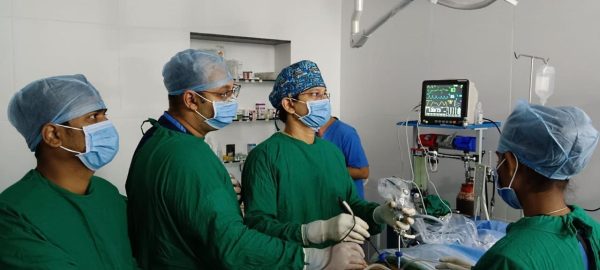
When faced with debilitating back pain, many patients mistakenly believe they must endure long, uncomfortable train or flight journeys to metropolitan cities like Mumbai or Delhi to get top-tier medical care.
Today, that is no longer the case. Vadodara boasts a highly advanced, rapidly growing medical ecosystem. Choosing a spine specialist in Vadodara offers several massive advantages for local patients and those traveling from surrounding districts like Bharuch, Anand, Nadiad, and Godhra.
Access to World-Class Diagnostics Accurate treatment starts with an accurate diagnosis. Clinics and hospitals in Vadodara are equipped with the latest diagnostic technology, including high-resolution 3T MRI scanners, advanced digital X-rays, and Electromyography (EMG) machines. These tools allow your surgeon to pinpoint the exact millimeter where your nerve is being pinched.
Zero Travel Stress Sitting for long periods is one of the worst triggers for sciatic pain. By seeking treatment in Vadodara, you eliminate the agony of long-distance travel. You can receive your consultations, undergo imaging, and have your procedures done just a short drive from your home.
A Patient-Centric Medical Culture Medical professionals in Gujarat are known for their strong emphasis on doctor-patient relationships. The top specialists take the time to sit down with you, thoroughly explain your MRI results in simple terms, and walk you through every available option without rushing you out the door.
6. Comprehensive Spine Treatment in Vadodara: Non-Surgical Options
The best surgeons are those who try to keep you out of the operating room whenever possible. A conservative, non-invasive approach is always the first line of defense against sciatica.
With proper care, up to 80% of sciatica cases resolve without the need for surgery within a few weeks to a few months. Your spine treatment in Vadodara will likely begin with a customized mix of the following therapies:
Targeted Medications Your doctor may prescribe a combination of non-steroidal anti-inflammatory drugs (NSAIDs) to reduce swelling, muscle relaxants to ease spasms, and specific nerve-pain medications (like Gabapentin) to calm down the overactive pain signals.
Physiotherapy and Targeted Stretching Movement is medicine. A skilled physiotherapist will guide you through specific exercises designed to take the pressure off your sciatic nerve. This usually involves core-strengthening exercises, pelvic tilts, and gentle hamstring stretches. Strengthening the muscles around your spine provides better support for your discs.
Hot and Cold Therapy In the initial acute phase, applying ice packs to your lower back can drastically reduce inflammation. After a few days, switching to a heating pad or hot water bottle can help increase blood flow to the area, promoting cellular healing and relaxing tight muscles.
Epidural Steroid Injections (ESIs) If oral medications and physical therapy do not provide enough relief, your specialist may recommend an epidural injection. Using advanced fluoroscopic (X-ray) guidance, the doctor injects a powerful anti-inflammatory corticosteroid directly into the space surrounding the inflamed sciatic nerve root. This can provide profound pain relief that lasts for months.
7. Advanced Surgical Solutions for Sciatica Relief
If you have tried conservative treatments for several months without success, or if you are experiencing severe muscle weakness and nerve damage, surgery may be the most responsible option.
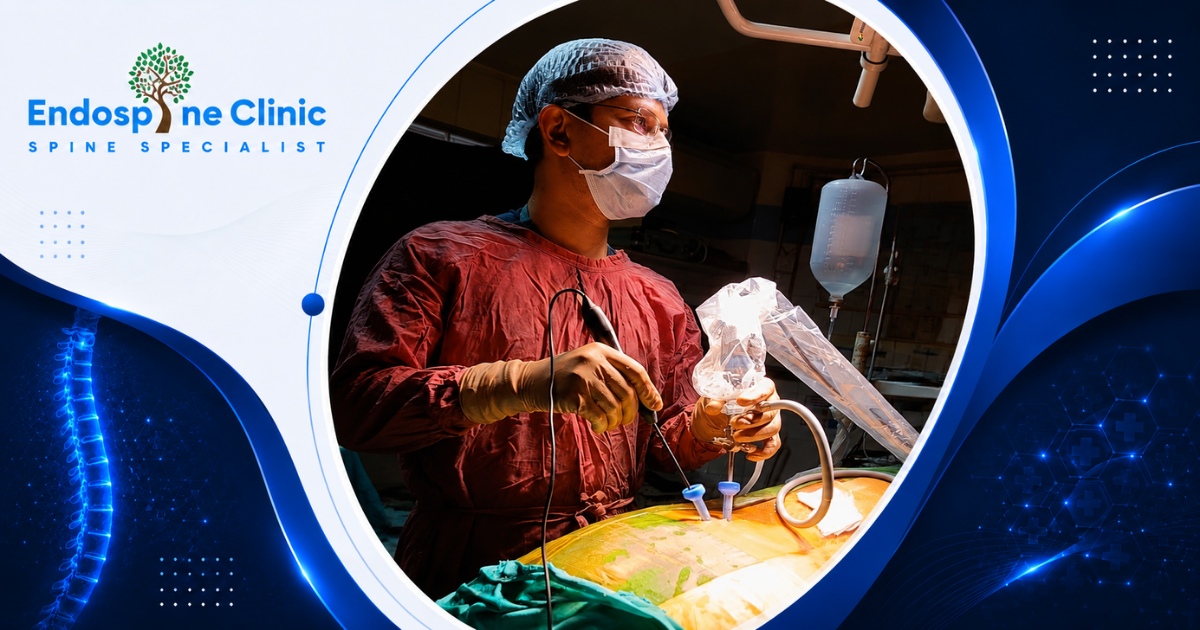
Thankfully, the days of massive, open-back surgeries are largely a thing of the past. The best spine surgeon in Vadodara will utilize Minimally Invasive Spine Surgery (MISS) techniques.
These modern procedures involve tiny incisions, specialized tubular retractors that gently push muscles aside (rather than cutting them), and high-powered surgical microscopes. The benefits include significantly less pain, virtually no blood loss, and a much faster return to daily life.
Microdiscectomy This is the gold standard surgical treatment for sciatica caused by a herniated disc. Through a tiny incision, the surgeon uses a microscope to locate the specific piece of disc material that is pressing on your nerve and carefully removes it. The rest of the healthy disc is left completely intact.
Laminectomy If your sciatica is caused by spinal stenosis (narrowing of the canal), a laminectomy may be required. The surgeon removes a small portion of the bone (the lamina) and any overgrown ligaments to create more room for the nerve to pass through comfortably.
8. Recovery & Rehabilitation: Your Path to a Pain-Free Life
Whether you heal through conservative methods or undergo a minimally invasive microdiscectomy, the recovery phase is where the real magic happens.
Immediate Post-Surgery Recovery If you undergo minimally invasive surgery, you will likely be encouraged to stand up and walk within hours of waking up from anesthesia. Most patients are discharged from the hospital within 24 to 48 hours. You will notice that the sharp, shooting leg pain is usually gone immediately.
The First Few Weeks at Home During the first two to four weeks, your primary job is to rest and walk. Walking is the best exercise for a healing spine. You must strictly avoid the “BLT” movements: No Bending, No Lifting (nothing heavier than a gallon of milk), and No Twisting your spine.
Long-Term Rehabilitation Around the four-week mark, your doctor will clear you to begin post-operative physical therapy. This phase focuses on building a “corset” of strong abdominal and back muscles to protect your spine from future injuries. With dedication to your rehab exercises, you can expect to return to all your normal activities, including sports, within three to six months.
9. Frequently Asked Questions (FAQs)
Q1: Can sciatica go away entirely on its own? A: Yes, in many cases, mild sciatica caused by a minor disc bulge or muscle spasm can resolve on its own with rest, over-the-counter anti-inflammatories, and gentle stretching within 4 to 6 weeks. However, if the pain persists longer than this, medical intervention is required.
Q2: When should I consult the best spine surgeon in Vadodara for my leg pain? A: You should book a consultation if your pain lasts longer than four weeks, if the pain is the result of a sudden trauma (like a car accident), or if the pain is so severe that you cannot stand or sleep. Seek immediate emergency care if you experience numbness in your groin or a loss of bladder control.
Q3: Is complete bed rest recommended for sciatica pain? A: No. While a day or two of rest is fine during a severe flare-up, prolonged bed rest is actually harmful. It weakens your core muscles and can cause your joints to stiffen, making the pain worse. Gentle, modified movement is highly recommended.
Q4: Will I definitely need surgery for my sciatica? A: Absolutely not. Surgery is always considered a last resort. An ethical and experienced spine specialist in Vadodara will only recommend surgery if conservative options like physical therapy and epidural injections have failed after several months of dedicated effort.
Q5: What are the primary signs that non-surgical spine treatment in Vadodara is working? A: A reduction in the intensity of shooting pain, fewer episodes of sharp tingling, and an increased ability to walk or sit comfortably are excellent indicators that non-surgical therapies are successfully resolving your nerve compression.
10. Conclusion and Next Steps
Sciatica is a fiercely painful condition that can halt your life in its tracks. However, it is also a highly treatable condition. You do not have to accept chronic pain as your new normal.
By understanding the mechanics of your sciatic nerve, recognizing the early symptoms, and seeking timely help, you can completely resolve the issue. Vadodara offers an incredible medical infrastructure designed to guide you from diagnosis to full recovery without the stress of traveling far from home.
Take the first step toward a pain-free life today. If you are tired of struggling with radiating leg pain and want an accurate, honest diagnosis, it is time to speak with an expert. Visit our Comprehensive Spine Services Page to learn more about our advanced diagnostic tools and minimally invasive treatments. Contact our clinic today to schedule a consultation with the leading specialists in Gujarat.
