
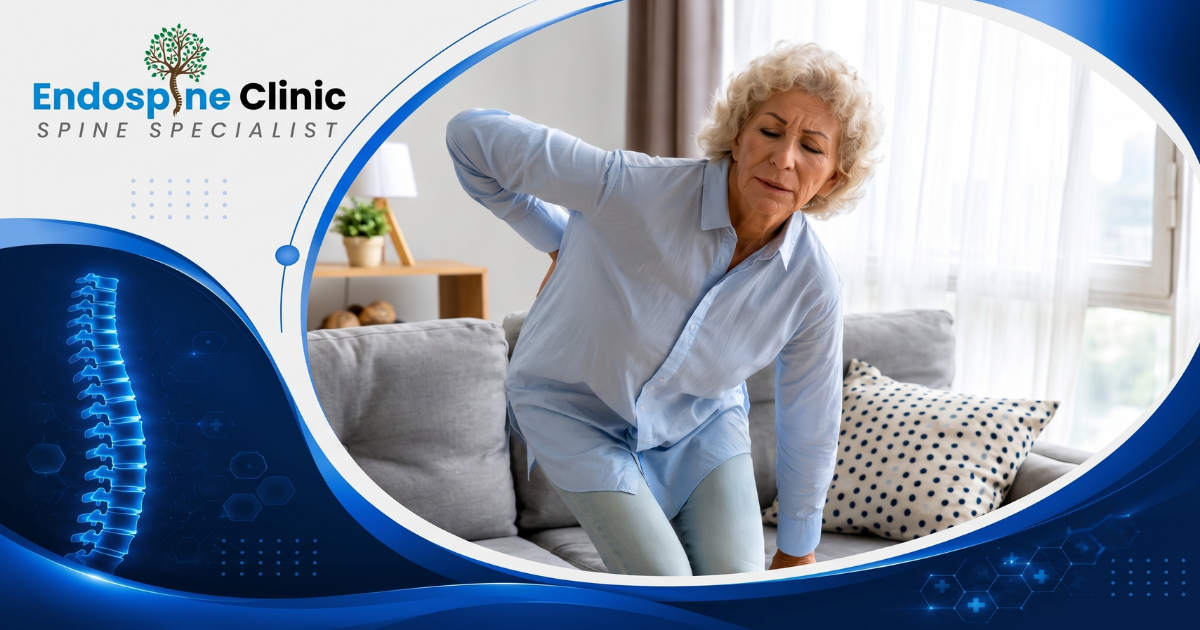
Sharp, shooting pain that radiates from the lower back down to the toes can be entirely debilitating. This condition, widely recognized as sciatica, is not an independent illness but rather a clear signal that the sciatic nerve is under severe duress. When discussing sciatica in different age groups, it becomes immediately apparent that this nerve compression does not manifest uniformly across a lifespan. A working professional in their late twenties experiencing sudden shooting pains experiences a radically different pathology than a retired individual facing chronic, progressive discomfort. Recognizing these core distinctions is absolutely essential for securing an accurate diagnosis and obtaining highly effective spine treatment in Vadodara.
The human spine undergoes a natural, continuous evolution as it ages. In early adulthood, the spinal columns are typically resilient, flexible, and highly hydrated, meaning that nerve compression is usually the result of sudden mechanical injury or immense physical exertion. Conversely, as the body transitions into its senior years, the structural integrity of the spinal column shifts toward gradual wear, drying of spinal discs, and bony overgrowths. For residents navigating healthcare options in Gujarat, consulting a qualified spine specialist in Vadodara ensures that these age-specific variations are carefully factored into an individualized recovery plan. This comprehensive guide breaks down the structural differences, diverse symptoms, and targeted medical interventions required to address sciatic nerve pain across generations.
Table of Contents
-
The Lifespan of Nerve Pain: A Unique Diagnostic Angle
-
Symptoms and Presentation: Young Adults vs. Seniors
-
Tailored Diagnostic Framework in Vadodara
-
Comprehensive Treatment Strategies for Every Generation
-
Recovery Timelines and Local Rehabilitation Protocols
-
Navigating Spine Care in Vadodara: Why Location Matters
-
Frequently Asked Questions (FAQs)
-
Conclusion & Next Steps
The Lifespan of Nerve Pain: A Unique Diagnostic Angle
To truly appreciate how sciatica in different age groups operates, one must look closely at the underlying spinal environment. The root cause of sciatic nerve irritation changes completely as the body matures. In younger patient demographics, the primary culprit is almost always an acute structural failure of a spinal disc, whereas in older demographics, the issue is typically a gradual reduction of available space within the spinal canal itself.
The Young Spine: Mechanical and Inflammatory Triggers
In young adults, typically ranging from 20 to 45 years old, the intervertebral discs—the rubbery cushions between the spinal bones—have a high water content. This makes them excellent shock absorbers but highly susceptible to internal pressure changes. When a young adult experiences sciatica, it is frequently due to a herniated disc, often referred to as a slipped disc.
Under heavy lifting, sudden twisting, or prolonged poor posture during long desk shifts, the soft inner gel of the disc pushes through the tough outer layer. This protruding material directly presses against the roots of the sciatic nerve. Furthermore, the exposed inner gel triggers an intense chemical inflammatory response, severely irritating the surrounding nerve fibers even if the physical pressure is minimal.
The Senior Spine: Degenerative and Structural Narrowing
For seniors aged 60 and above, the pathophysiology undergoes a complete transformation. Over decades of movement, the spinal discs naturally lose their hydration, flatten, and become less compliant. To compensate for this loss of cushioning and stability, the body routinely develops bone spurs, which are localized bony overgrowths designed to reinforce the spine.
At the same time, the protective spinal ligaments thicken over time. Together, these degenerative structural changes lead to lumbar spinal stenosis, a condition defined by the progressive narrowing of the spaces through which the spinal cord and nerve roots travel. When a senior citizen develops sciatica, it is typically caused by this mechanical crowding rather than a sudden, inflammatory disc rupture.
Symptoms and Presentation: Young Adults vs. Seniors
Because the underlying structural causes differ so vastly between generations, the daily clinical presentation of symptoms varies significantly as well. Understanding these distinct symptom profiles helps patients seek timely evaluations from the best spine surgeon in Vadodara before chronic nerve damage sets in.
Sciatica in Young Adults: Acute, Sharp, and Positional
For younger patients, the onset of sciatica is often sudden, dramatic, and closely linked to specific physical movements. A young adult might feel fine in the morning but experience an agonizing electrical shock down their leg after bending over to pick up an item or after a rigorous workout session.
-
Pain Characteristics: The discomfort is frequently described as a sharp, stabbing, electrical sensation that radiates rapidly down one leg, often traveling past the knee into the calf or foot.
-
Aggravating Factors: Sitting for extended durations, leaning forward, coughing, or sneezing dramatically increases the intradiscal pressure, making the nerve pain significantly worse.
-
Primary Impact: The primary disruption centers around acute functional limitations, such as an inability to sit at a work desk, drive a vehicle, or participate in athletic activities.
Sciatica in Seniors: Chronic, Bilateral, and Ambulatory
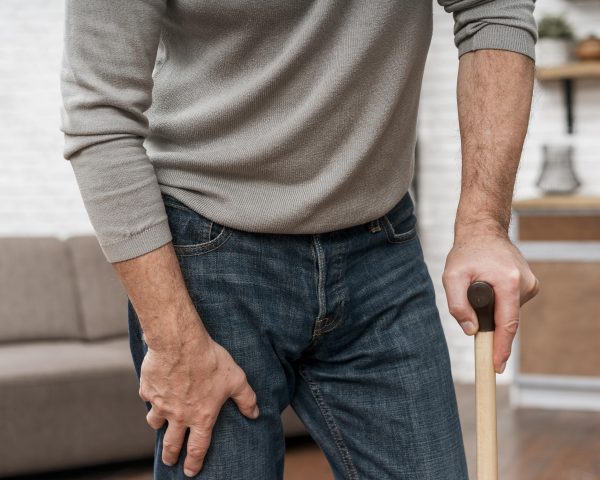
In older adults, the symptoms tend to creep up slowly, gradually intensifying over months or even years. The pain is rarely a sudden shock; rather, it presents as a persistent, heavy ache that worsens steadily with prolonged upright activity.
-
Pain Characteristics: Seniors often describe a dull, heavy, cramping, or burning sensation in the lower back, buttocks, and thighs. Unlike younger individuals, seniors frequently experience these symptoms in both legs simultaneously due to generalized spinal narrowing.
-
Aggravating Factors: Standing erect or walking for moderate distances places the lumbar spine into extension, which further constricts the narrowed nerve pathways.
-
Relief Modalities: Seniors often find immediate, temporary relief by leaning forward slightly—a clinical phenomenon known as the “shopping cart sign”—because bending forward naturally opens up the spinal canal and relieves immediate pressure on the nerve.
-
Primary Impact: The major disruption manifests as a progressive loss of physical mobility, increased risk of balance instability, and a severe reduction in independent living capacity.
Tailored Diagnostic Framework in Vadodara
Achieving long-term relief from sciatic nerve pain requires a precise diagnostic roadmap that maps out the exact structural anomaly. A certified spine specialist in Vadodara utilizes a combination of comprehensive clinical evaluations and advanced diagnostic imaging tailored strictly to the patient’s age profile.
For younger individuals, the physical assessment heavily relies on the Straight Leg Raise (SLR) test. During this test, the patient lies flat on their back, and the clinician slowly lifts the affected leg upward while keeping the knee straight. If this movement reproduces the characteristic shooting leg pain at an angle between 30 and 70 degrees, it serves as a highly reliable clinical indicator of a herniated disc.
For senior patients, diagnostic evaluation frequently focuses on walking tolerance tests and structural flexibility assessments, as the straight leg raise test is often less indicative in cases of chronic spinal stenosis.
Following the clinical exam, advanced cross-sectional imaging is utilized to confirm the physical findings. High-resolution Magnetic Resonance Imaging (MRI) is the gold standard for younger adults, as it perfectly visualizes soft tissues, allowing doctors to view the exact size, direction, and inflammatory footprint of a disc herniation. For older adults, especially those who may have implants that restrict MRI usage, a computed tomography (CT) scan combined with a myelogram can provide incredibly detailed, high-contrast images of the bony architecture and canal narrowing.
Comprehensive Treatment Strategies for Every Generation
Managing sciatica in different age groups demands a highly individualized care philosophy. A treatment plan that successfully helps a young athlete return to the field could prove overly stressful or ineffective for an elderly patient managing multiple medical conditions.
Non-Surgical and Conservative Care
The vast majority of sciatica cases can be managed effectively without entering an operating theater. Conservative medical care serves as the baseline approach for all age brackets, though the specific execution varies.
-
Targeted Physical Therapy: For younger patients, the rehabilitation focus centers heavily on aggressive core stabilization, functional movement retraining, and dynamic exercises designed to draw the herniated disc material back toward the center of the spine. For senior patients, the physical therapy regimen shifts away from heavy strain toward low-impact hydrotherapy, gentle stretching, and specialized exercises aimed at maintaining upright balance and building spinal endurance.
-
Advanced Medication Protocols: Younger patients respond incredibly well to short, targeted courses of non-steroidal anti-inflammatory drugs (NSAIDs) to quell the intense chemical inflammation around a disc rupture. Seniors, however, must use NSAIDs with extreme caution due to potential risks involving renal function and gastrointestinal health. Instead, specialists frequently prescribe targeted neuro-modulators or mild analgesics tailored for long-term safety.
-
Interventional Pain Management: When oral medications fail to provide sufficient relief, image-guided epidural steroid injections offer profound benefit. delivering targeted anti-inflammatory medication directly into the epidural space can rapidly quiet down hyper-irritable nerve roots, breaking the cycle of severe pain and allowing the patient to actively participate in physical therapy.
Advanced Surgical Solutions
When conservative measures fail to deliver lasting relief over six to twelve weeks, or if progressive neurological deficits like foot drop or bladder dysfunction emerge, surgical intervention becomes necessary.
For young adults dealing with an unyielding disc herniation, a minimally invasive microdiscectomy is highly effective. Through a tiny incision, the surgeon utilizes high-magnification microscopes to remove only the small, protruding fragment of disc material that is actively pinching the nerve root. The surrounding healthy disc structure is left completely intact, allowing the young patient to retain full spinal mobility and return to an active lifestyle quickly.
For older patients suffering from severe structural crowding, the surgical objective focuses on decompression via a lumbar laminectomy. During this procedure, the surgeon carefully removes the thickened bone spurs and overgrown ligaments that are choking the spinal canal. If the patient’s spine exhibits significant structural instability, the decompression may be paired with a targeted spinal fusion to stabilize the bones, ensuring long-term structural integrity.
Recovery Timelines and Local Rehabilitation Protocols
The journey toward complete recovery depends significantly on the patient’s baseline healing capacity and the specific type of medical intervention performed.
| Aspect of Recovery | Young Adults (Typical Profile) | Seniors (Typical Profile) |
|---|---|---|
| Primary Structural Goal | Rapid disc healing & core strengthening | Canal decompression & mobility preservation |
| Conservative Timeline | 4 to 6 weeks for substantial relief | 8 to 12 weeks of steady, gradual progress |
| Post-Surgical Healing | 2 to 4 weeks to resume light office work | 6 to 12 weeks for safe, independent ambulation |
| Long-Term Focus | Eradicating poor workplace ergonomics | Maintaining flexibility & fall prevention |
Following any formal spine treatment in Vadodara, engaging in organized, local physical rehabilitation is absolutely critical to avoid recurrence. Younger patients must focus on modifying their workplace setup, utilizing standing desks, and avoiding prolonged sitting. Seniors require ongoing guidance to safely perform daily functional movements, ensuring they can climb stairs, garden, and walk independently without placing undue stress on their recovering lumbar spine.
Navigating Spine Care in Vadodara: Why Location Matters
Seeking specialized care locally provides immense clinical and practical advantages for patients dealing with severe nerve pain. Attempting to travel long distances across states while suffering from acute sciatic nerve compression causes intense physical distress and can exacerbate spinal inflammation. Choosing to receive comprehensive medical treatment locally ensures seamless access to excellent care without the unnecessary burden of long-distance travel.
Vadodara has rapidly evolved into a premier medical hub for advanced orthopedics and neurosurgery within Gujarat. The city features state-of-the-art diagnostic facilities equipped with modern, open-bore MRI machines, which are particularly beneficial for anxious patients or elderly individuals who cannot tolerate traditional, cramped imaging tubes. Major medical corridors, such as those located around Alkapuri, Gotri, and the Race Course road area, host highly specialized spinal clinics and fully integrated rehabilitation centers.
Furthermore, receiving treatment within Vadodara allows patients to build a strong, ongoing relationship with their medical team. Sciatica recovery often requires fine-tuning medication dosages, attending multiple physical therapy sessions, and receiving regular follow-up evaluations. Having a trusted, highly accessible spine specialist in Vadodara ensures that if a patient experiences a sudden flare-up or requires a prompt adjustment to their treatment plan, expert medical assistance is only a short drive away. This local accessibility provides immense peace of mind to both young working professionals and elderly citizens who rely on family networks for logistical support.
To learn more about the specialized diagnostic tools and personalized treatment programs available for spinal disorders at our center, please review our comprehensive spine service page.
Frequently Asked Questions (FAQs)
1. Does sciatica in different age groups require completely different diagnostic testing?
While the core imaging modalities like MRI and CT scans remain standard across all demographics, the clinical emphasis shifts based on age. In younger adults, physicians heavily utilize dynamic physical tests like the straight leg raise to identify acute disc herniations. In seniors, the diagnostic focus centers heavily on assessing walking endurance, balance stability, and utilizing imaging to map out widespread bony degeneration and spinal stenosis.
2. Can a young adult fully recover from sciatica without needing major spinal surgery?
Yes, absolutely. Over 90% of young adults suffering from acute sciatica caused by a disc herniation recover completely using conservative treatments. This includes targeted anti-inflammatory medications, dedicated core-strengthening physical therapy, and temporary activity modification. Surgery is strictly reserved for cases involving progressive muscle weakness, loss of bowel control, or pain that completely fails to respond to dedicated conservative care.
3. Why is walking often much more difficult for senior citizens with sciatica compared to young adults?
In senior citizens, sciatica is frequently caused by lumbar spinal stenosis, which is the physical narrowing of the spinal canal. When standing upright or walking, the spine naturally extends, which further shrinks the available space for the nerves, causing rapid cramping and pain. Younger adults usually have sciatica from a herniated disc, where the pain is triggered more by sitting down or bending forward rather than walking upright.
4. How can I locate a qualified spine specialist in Vadodara who understands age-specific treatments?
Vadodara houses several major multi-specialty hospitals and dedicated orthopedic centers along prominent medical belts like Alkapuri, Gotri, and Vasna Road. When choosing a specialist, look for a board-certified orthopedic spine surgeon or neurosurgeon who specializes specifically in modern, minimally invasive spinal procedures and offers integrated, post-treatment physical rehabilitation pathways tailored for your specific age group.
Conclusion & Next Steps
Sciatica is a highly manageable condition, but achieving long-term relief requires acknowledging how the root causes shift across different generations. Whether you are a young professional struggling with an acute disc herniation or a senior citizen dealing with gradual spinal stenosis, getting a precise diagnosis tailored to your specific stage of life is the absolute first step toward reclaiming your physical independence.
Do not allow persistent leg pain or lower back numbness to dictate your daily schedule. Seeking timely intervention from a dedicated medical professional ensures that you receive the most advanced, safe, and effective care available. Contact us today to schedule a detailed evaluation with a premier spine specialist in Vadodara, and let us help you design a customized recovery plan for ultimate, long-lasting relief.
