
Pregnancy is an incredibly beautiful journey, but it is not without its physical challenges. As your body miraculously transforms to accommodate your growing baby, you might start to experience a range of unexpected aches. For many expecting mothers, one of the most surprising and intense discomforts is a sharp, shooting pain radiating from the lower back down through the legs. If this sounds familiar, you might be dealing with sciatica during pregnancy.
You are not alone in this. Countless pregnant women experience this intense nerve pain, especially as they enter their second and third trimesters. While minor backaches are a standard part of carrying a child, the electrical jolts of sciatica can make everyday activities like walking, sitting, or even rolling over in bed feel like a monumental task.
If you are an expecting mother residing in Gujarat, navigating this discomfort doesn’t have to be a lonely battle. Finding the best spine surgeon in Vadodara or a dedicated local physical therapist can make a world of difference in your prenatal care. Local experts understand how to safely manage maternal nerve pain, ensuring both you and your baby remain healthy and stress-free.
In this comprehensive guide, we will explore exactly what sciatica is, why it happens during pregnancy, and most importantly, how you can find safe, effective, and gentle relief. From pregnancy-safe stretches to knowing when it is time to consult a spine specialist in Vadodara, this guide is designed to help you reclaim your comfort.
Table of Contents
-
What is Sciatica During Pregnancy?
-
The Anatomy of Sciatica: Why It Happens to Expecting Mothers
-
Recognizing the Symptoms: Is it Sciatica or Normal Back Pain?
-
7 Safe & Proven Exercises for Immediate Relief
-
Daily Habits & Posture Adjustments for Pregnant Women
-
Safe Home Remedies and Non-Surgical Treatments
-
When to See the Best Spine Surgeon in Vadodara
-
The Benefits of Timely Spine Treatment
-
Frequently Asked Questions (FAQs)
-
Conclusion and Next Steps
What is Sciatica During Pregnancy?
Sciatica is not actually a medical diagnosis in itself; rather, it is a symptom of an underlying issue involving the sciatic nerve. The sciatic nerve is the longest and thickest nerve in the human body. It originates in your lower back (the lumbar spine), runs deep through your buttocks, and branches down the back of both of your legs all the way to your feet.
When this massive nerve gets compressed, pinched, or inflamed, it sends out distress signals. These signals manifest as pain, tingling, or numbness along the nerve’s pathway.
During pregnancy, the rapid changes in your body can inadvertently put a tremendous amount of pressure on this nerve. While it can be quite painful, it is important to remember that sciatica is generally not harmful to your developing baby. However, it can significantly impact your quality of life, which is why finding a safe spine treatment in Vadodara or adopting gentle home management strategies is essential for your well-being.
The Anatomy of Sciatica: Why It Happens to Expecting Mothers
You might be wondering why a previously healthy back suddenly feels like it is sending electrical shocks down your legs. The female body undergoes profound biomechanical and hormonal shifts during pregnancy that create the perfect storm for sciatic nerve compression.
Here is a breakdown of why this happens:
1. The Hormone Relaxin
To prepare your pelvis for childbirth, your body releases a hormone appropriately called “relaxin.” This hormone loosens your ligaments and joints. While this is crucial for delivery, it can also cause your pelvic joints to become unstable. This instability forces your muscles to work overtime, often leading to spasms that can pinch the sciatic nerve.
2. A Shifting Center of Gravity
As your baby grows and your belly expands forward, your center of gravity drastically shifts. To compensate and keep from falling forward, most pregnant women naturally lean back. This arches the lower back, tightening the muscles in the pelvis and buttocks, which can easily trap the sciatic nerve.
3. The Baby’s Weight and Position
By the third trimester, your baby is growing rapidly. The sheer weight of your expanding uterus can press directly on the sciatic nerve where it exits the lower spine. Additionally, as the baby settles into a birth position deep in the pelvis, their head might rest directly on the nerve, triggering sudden, sharp pain.
4. Fluid Retention
Pregnancy increases the volume of fluid in your body. Sometimes, this extra fluid can accumulate around the nerve pathways in the lower back and pelvis, leading to swelling and subsequent nerve compression.
Recognizing the Symptoms: Is it Sciatica or Normal Back Pain?
It is easy to brush off any discomfort as “just another pregnancy symptom.” However, sciatica has a very distinct profile that separates it from standard, dull lower backaches.
Here are the classic symptoms to watch out for:
-
Shooting, Electric Pain: A sharp, burning, or jabbing pain that starts in the lower back or buttocks and shoots down the back of one thigh and calf.
-
One-Sided Discomfort: Sciatica typically affects only one side of the body at a time, though it can switch sides depending on how the baby moves.
-
Numbness and Tingling: You might experience a “pins and needles” sensation in your leg, foot, or toes.
-
Muscle Weakness: Your affected leg might feel heavy, weak, or difficult to move, making walking a challenge.
-
Triggered by Movement: The pain often worsens when you stand up after sitting for a long time, cough, sneeze, or try to roll over in bed.
If you are experiencing these symptoms, you don’t have to suffer in silence. Reaching out to a trusted spine specialist in Vadodara can help you get an accurate assessment and a customized relief plan.
7 Safe & Proven Exercises for Immediate Relief
When nerve pain strikes, your first instinct might be to stay in bed. However, gentle, targeted movement is actually one of the best ways to relieve sciatic compression.
Note: Always consult your obstetrician or a local physical therapist before starting any new exercise routine during pregnancy.
1. The Seated Piriformis Stretch
The piriformis is a muscle deep in the buttocks that often spasms during pregnancy and pinches the sciatic nerve.
-
Sit comfortably on a sturdy chair with both feet flat on the floor.
-
Cross your affected leg over the other, placing your ankle on the opposite knee (creating a “figure 4” shape).
-
Keep your back straight and gently lean forward from your hips until you feel a deep stretch in your buttocks.
-
Hold for 30 seconds and repeat a few times a day.
2. Modified Child’s Pose
This classic yoga posture safely elongates the spine and relieves lower back pressure, accommodating your growing belly.
-
Kneel on a soft yoga mat or carpet.
-
Bring your big toes together but spread your knees wide apart to make room for your belly.
-
Slowly walk your hands forward on the floor and lower your chest toward the ground.
-
Rest your forehead on the floor or a pillow, breathing deeply into your lower back for 1 minute.
3. Standing Table Stretch
This is excellent for stretching the lower back and hamstrings without putting pressure on your abdomen.
-
Stand facing a sturdy table or kitchen counter, feet wider than hip-width apart.
-
Place your hands flat on the surface and slowly walk your feet backward.
-
Keep your arms straight and your back flat until your body forms an “L” shape.
-
Gently pull your hips away from the table to decompress your spine. Hold for 30 to 60 seconds.
4. Kneeling Hip Flexor Stretch
Tight hip flexors can tilt your pelvis forward, worsening nerve pain.
-
Kneel on the floor (use a cushion under your knees for comfort).
-
Step one foot forward so your knee is bent at a 90-degree angle.
-
Gently shift your weight forward into the front leg, keeping your back straight.
-
You will feel a stretch in the front of your kneeling hip. Hold for 30 seconds and switch sides.
5. Gentle Pelvic Tilts
This simple movement strengthens the core and relieves pressure on the lower lumbar spine.
-
Get on your hands and knees on the floor (all fours).
-
Inhale and allow your back to remain in a neutral, flat position.
-
As you exhale, gently tighten your abdominal muscles, tuck your tailbone under, and round your lower back slightly toward the ceiling.
-
Release and repeat 10 times.
6. Glute Foam Rolling
Using a foam roller can act as a deep tissue massage to release muscle knots in the buttocks.
-
Sit carefully on a foam roller placed on the floor, using your hands behind you for support.
-
Cross the ankle of your painful side over your opposite knee.
-
Slowly roll back and forth over your glute muscle until you find a tender spot.
-
Hold on that spot for 30 seconds to allow the muscle to release.
7. Aqua Therapy / Swimming
Water creates a buoyant environment that instantly takes the weight of your baby off your spine and sciatic nerve. Doing gentle water aerobics or simply walking in a pool can provide profound relief. Expecting mothers in Vadodara often utilize local club pools or specialized prenatal aqua therapy classes to stay active without joint strain.
Daily Habits & Posture Adjustments for Pregnant Women
How you move, sit, and sleep throughout the day plays a massive role in managing sciatic pain. Small adjustments can prevent the nerve from becoming inflamed in the first place.
Mastering Your Sleep Position
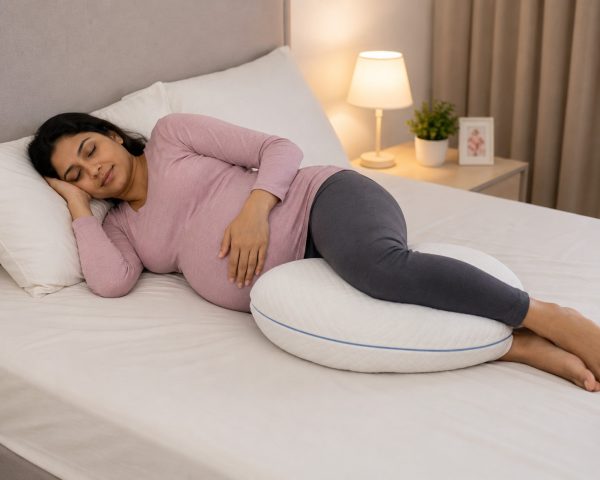
Sleeping can be incredibly difficult with sciatica.
-
Sleep on Your Side: Sleep on the side opposite to your pain. If your right leg hurts, sleep on your left side to take the pressure off the nerve.
-
Use a Pregnancy Pillow: Place a thick, firm pillow between your knees and ankles. This keeps your hips aligned and prevents your top leg from pulling your spine out of alignment.
Sitting and Standing Correctly
-
Avoid Soft Couches: Deep, soft sofas cause your pelvis to tilt backward, compressing the lower spine. Sit on firm chairs with good lower back support.
-
Don’t Cross Your Legs: Sitting with your legs crossed twists the pelvis and tightens the piriformis muscle.
-
Take Frequent Breaks: If you work at a desk in Vadodara, set an alarm to stand up and walk around every 30 minutes.
Lifting with Care
If you already have a toddler at home or need to pick something up, never bend at the waist. Always bend your knees, keep your back straight, and let your strong leg muscles do the lifting.
Safe Home Remedies and Non-Surgical Treatments
Beyond exercise, there are several conservative, pregnancy-safe therapies that can soothe an inflamed nerve.
Heat and Cold Therapy
-
Cold Packs: In the first 48 hours of a sudden pain flare-up, wrap an ice pack in a towel and apply it to your lower back for 15 minutes to reduce inflammation.
-
Warm Compresses: After the initial flare-up, use a warm (not hot) heating pad on your lower back and buttocks to relax tight, spasming muscles.
Prenatal Massage
A certified prenatal massage therapist can use gentle techniques to release tension in the lower back and glutes. Ensure you find a therapist in Vadodara who specifically specializes in treating pregnant women, as they will know the proper pressure points and positioning.
Maternity Support Belts
A high-quality maternity belly band acts like a hammock for your growing baby. By lifting the abdomen slightly, it redistributes the weight and takes a significant amount of stress off your lower back and sciatic nerve.
When to See the Best Spine Surgeon in Vadodara
While most cases of pregnancy-related sciatica can be managed with stretches and home care, there are times when medical intervention is necessary. You do not have to endure severe pain just because you are pregnant.
Consulting a spine specialist in Vadodara ensures that you receive a proper evaluation to rule out other spine conditions like a herniated disc, which can mimic normal pregnancy sciatica.
Red Flags: Seek immediate medical attention if you experience:
-
A sudden loss of feeling or severe numbness in your legs, groin, or feet.
-
Loss of bowel or bladder control (which can be a sign of a rare but serious condition called Cauda Equina Syndrome).
-
Pain that is so severe you cannot walk or stand at all.
-
Pain accompanied by a fever or bleeding.
Your local specialist in Vadodara can work in tandem with your obstetrician to create a safe, effective pain management plan tailored to your specific trimester.
The Benefits of Timely Spine Treatment
Addressing sciatica early rather than “toughing it out” offers numerous benefits for expecting mothers:
-
Improved Sleep Quality: Managing the pain allows for deeper, more restorative sleep, which is crucial for fetal development and maternal health.
-
Better Mobility: Keeping the pain at bay helps you stay active, which is recommended by the American College of Obstetricians and Gynecologists (ACOG) for a healthy pregnancy and smoother labor.
-
Faster Postpartum Recovery: Preventing severe muscle imbalances and nerve compression during pregnancy means your body will bounce back much faster after delivery.
Frequently Asked Questions (FAQs)
1. Will sciatica affect my baby or my delivery?
No, sciatica does not directly affect your baby’s health or development. However, severe pain might make it difficult to find comfortable positions during labor. Discussing this with your doctor and a spine specialist in Vadodara beforehand can help you plan alternative laboring positions.
2. Does sciatica go away immediately after giving birth?
For most women, the pain vanishes almost instantly or within a few weeks after delivery, as the baby’s weight is removed and hormone levels normalize. If pain persists for months postpartum, consult a spine specialist.
3. Is it safe to take painkillers for sciatica during pregnancy?
Always consult your doctor before taking any medication. Generally, acetaminophen (Tylenol) is considered safe, while NSAIDs like ibuprofen are strictly avoided during pregnancy as they can harm the baby.
4. Can I use a massage gun for sciatic pain while pregnant?
It is best to avoid powerful percussive massage guns on the lower back or pelvis during pregnancy, as the intense vibrations are not recommended. Stick to gentle manual massage or foam rolling.
5. How can I find the best spine surgeon in Vadodara for pregnant women?
Look for a specialist who has extensive experience in conservative, non-surgical management and works closely with physical therapists and obstetricians in the Gujarat region.
Conclusion and Next Steps
Experiencing sciatica during pregnancy can be exhausting and emotionally draining, but it is highly manageable. By incorporating gentle stretches, adjusting your posture, and knowing your physical limits, you can significantly reduce nerve pain and enjoy this precious time in your life. Remember, enduring severe pain is not a mandatory part of becoming a mother.
If home remedies and exercises aren’t providing the relief you need, do not hesitate to seek professional help. The right guidance can make your journey to motherhood much smoother and more comfortable.
Are you struggling with persistent back and leg pain during your pregnancy? Don’t let sciatica steal the joy of expecting your little one. Contact the best spine surgeon in Vadodara today to schedule a gentle, comprehensive evaluation. Prioritize your comfort and spinal health—book your consultation now and take the first step toward a pain-free pregnancy!
