

Every morning across the country, millions of students sling heavy bags over their shoulders and head off to class. The combination of Backpacks and School Life has become synonymous with growing up. However, as educational demands increase, so does the physical weight of textbooks, laptops, and project materials.
For students in bustling cities, navigating morning commutes, staircases, and after-school tuitions with a heavy load is a daily reality. But at what cost to their growing bodies? The relationship between Backpacks and School Life is increasingly becoming a medical concern, leading to posture issues, muscle fatigue, and severe back pain in teenagers and young adults.
If you are a parent or a student, understanding the biomechanics of carrying a heavy bag is crucial. In this comprehensive guide, we will explore how heavy bags impact spinal health, identify early warning signs of damage, and provide actionable, safe carrying habits. We will also discuss when it is time to consult a spine specialist in Vadodara to prevent long-term postural defects.
Table of Contents
-
The Hidden Impact: How Heavy Bags Affect Growing Spines
-
6 Warning Signs Your Backpack is Too Heavy
-
The Ultimate Guide: Safe Carrying Habits for Students
-
Traditional vs. Ergonomic Backpacks: A Quick Comparison
-
When to Seek Spine Treatment in Vadodara
-
Long-Term Benefits of Proper Backpack Ergonomics
-
Frequently Asked Questions (FAQs)
-
Conclusion
The Hidden Impact: How Heavy Bags Affect Growing Spines
The human spine is a complex structure made of bones, discs, muscles, and ligaments. It is designed to support the body’s weight and facilitate movement. However, a child’s spine is still developing, making it highly susceptible to external stresses.
When a student carries a backpack that is too heavy, the body naturally compensates by altering its center of gravity. To balance the backward pull of the bag, the student will lean forward at the hips or arch their back.
This unnatural posture compresses the spine and places immense strain on the neck and lower back muscles. Over time, the daily routine of Backpacks and School Life can lead to chronic muscle strain, altered posture, and a heightened risk of spinal misalignment.
Furthermore, wearing a backpack on just one shoulder—a common habit among teenagers—forces the spine to curve aggressively to one side. This asymmetric load distribution can contribute to functional scoliosis and severe shoulder pain.
6 Warning Signs Your Backpack is Too Heavy
Children and college students often ignore mild discomfort, assuming it is just a normal part of their academic routine. However, parents and educators should watch for these clear warning signs:
-
Struggling to Put the Bag On: If a student has to hoist, heave, or use momentum to get the bag onto their shoulders, it is definitively too heavy.
-
Red Marks and Indentations: Deep, red strap marks on the shoulders indicate poor weight distribution and restricted blood circulation.
-
Forward Head Posture: Leaning forward heavily while walking to counterbalance the weight of the bag.
-
Tingling or Numbness: Experiencing a “pins and needles” sensation in the arms or hands, which suggests nerve compression in the neck and shoulder area.
-
Complaints of Aching Joints: Frequent complaints of lower back, neck, or shoulder pain immediately after school or tuition classes.
-
Altered Walking Gait: A noticeable change in how the student walks, often appearing stiff or off-balance when wearing the bag.
If your child exhibits these symptoms persistently, it may be time to consult the best spine surgeon in Vadodara for a comprehensive postural assessment.
The Ultimate Guide: Safe Carrying Habits for Students
Preventing back pain does not mean eliminating backpacks altogether. By adopting intelligent, ergonomic habits, students can protect their spines while carrying their daily essentials.
1. Respect the 10-15% Rule Health professionals universally agree that a loaded backpack should never exceed 10% to 15% of the student’s total body weight. For a student weighing 45 kg, their bag should weigh no more than 4.5 to 6.7 kg.
2. Always Use Both Straps Slinging a heavy bag over one shoulder is a recipe for spinal misalignment. Using both shoulder straps distributes the weight evenly across the back, keeping the spine completely straight and reducing isolated muscle strain.
3. Adjust for a Snug Fit Backpacks should not sag down to the buttocks. Adjust the shoulder straps so that the bag sits flush against the middle of the back. The bottom of the bag should rest in the curve of the lower back, never more than four inches below the waistline.
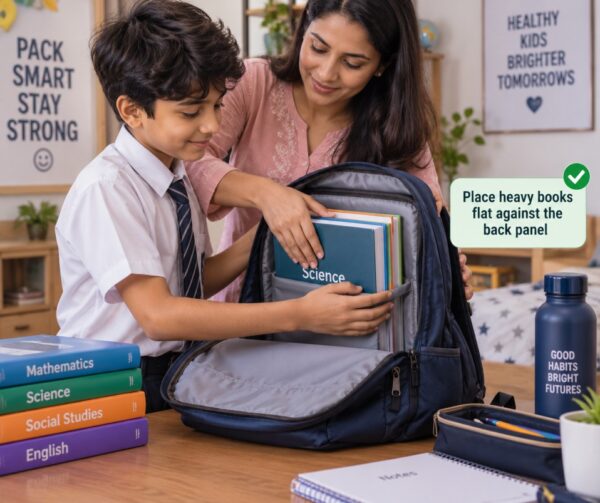
4. Pack Smart and Distribute Weight The way a bag is packed drastically alters how it feels. Place the heaviest items (like textbooks and laptops) closest to the body’s center of gravity—flat against the back panel. Place lighter items in the front and side compartments.
5. Utilize Chest and Waist Belts If the backpack comes with a chest strap or waist belt, use them. These features are designed to transfer a significant portion of the load from the shoulders down to the sturdier muscles of the hips and pelvis.
6. Clean It Out Weekly Backpacks and School Life often involve accumulating unnecessary clutter. Dedicate a specific day each week to empty the bag completely, removing old assignments, unnecessary books, and extra supplies that add dead weight.
Traditional vs. Ergonomic Backpacks: A Quick Comparison
Not all bags are created equal. When shopping for school supplies, prioritizing spine health over mere aesthetics can make a massive difference.
Traditional Backpacks:
-
Feature thin, unpadded shoulder straps that dig into the skin.
-
Lack structural support, causing the bag to sag and pull backward.
-
Have single, large compartments where heavy items easily shift away from the spine.
-
Rarely include chest or waist straps for load distribution.
Ergonomic Backpacks:
-
Designed with wide, heavily padded shoulder straps for comfort.
-
Feature a padded, contoured back panel that matches the natural curve of the spine.
-
Include multiple compartments to secure laptops and books tightly against the back.
-
Come equipped with adjustable chest clips and padded hip belts to stabilize the load.
Investing in an ergonomic bag is one of the easiest ways to safeguard a student’s spinal health throughout their academic journey.
When to Seek Spine Treatment in Vadodara
 While implementing safe carrying habits resolves most minor aches, some symptoms require professional medical intervention. Knowing when to escalate the issue is critical for long-term health.
You should immediately seek spine treatment in Vadodara if the student experiences pain that persists for more than a few days, even after lightening the backpack load. Persistent pain is not a normal part of growing up.
Additionally, seek prompt medical care if the back pain is accompanied by severe muscle weakness, numbness traveling down the arms or legs, or if you notice a visible, physical curvature in the child’s spine when they are standing naturally.
Local clinics and hospitals in the region offer advanced diagnostic imaging to assess the exact impact of heavy lifting on a young spine. Consulting a trusted spine specialist in Vadodara ensures that minor postural deviations are corrected through physical therapy, targeted exercises, and ergonomic education before they require invasive procedures.
Long-Term Benefits of Proper Backpack Ergonomics
Addressing the challenges of Backpacks and School Life proactively yields incredible benefits that extend far beyond the classroom.
-
Enhanced Academic Focus: Chronic pain is immensely distracting. By eliminating back and neck strain, students can concentrate fully on their studies and perform better academically.
-
Healthy Spinal Development: Maintaining proper posture allows the spine to grow naturally, reducing the risk of developing conditions like kyphosis (hunchback) or functional scoliosis.
-
Improved Energy Levels: Carrying an imbalanced, heavy load exhausts the body’s energy reserves rapidly. Ergonomic carrying habits conserve energy for sports, extracurricular activities, and homework.
-
Lifelong Joint Health: Learning postural awareness in school instills habits that protect the spine during future university studies, desk jobs, and adult life.
Frequently Asked Questions (FAQs)
1. What is the maximum weight a school backpack should be? Medical experts recommend that a student’s backpack should not exceed 10% to 15% of their total body weight. Regularly weighing the bag on a bathroom scale can help maintain this healthy limit.
2. Can wearing a heavy backpack cause permanent spine damage? While short-term use mostly causes muscle strain and fatigue, chronically carrying excessive weight during critical growth spurts can lead to long-term postural alterations and chronic pain conditions. If you are concerned, consult a spine specialist in Vadodara for a postural check.
3. Are trolley bags (rolling backpacks) a better alternative for students? Trolley bags can significantly reduce shoulder and back strain by removing the weight entirely. However, they can be impractical for students who must navigate multiple flights of stairs or walk through crowded, uneven streets.
4. How do I know if I need to see the best spine surgeon in Vadodara for my child’s back pain? If your child’s back pain lasts longer than a week, is severe enough to wake them up at night, or includes numbness, tingling, and weakness in their limbs, you should seek immediate consultation with a top-rated spinal surgeon or orthopedic specialist.
Conclusion
The rigors of academia should never come at the expense of a student’s physical well-being. The intersection of Backpacks and School Life does not have to result in chronic pain and poor posture. By choosing the right ergonomic equipment, enforcing the 10-15% weight rule, and teaching children to pack intelligently, we can protect their growing spines.
Awareness is the first step toward prevention. Monitor your child’s posture, listen to their complaints regarding physical discomfort, and do not hesitate to seek professional guidance if symptoms persist.
Take Action for Your Child’s Spine Today If heavy school bags have already taken a toll on your child’s posture, early intervention is key. Do not ignore persistent back or neck pain. Book a comprehensive consultation with a leading spine expert today to ensure your child grows up pain-free, healthy, and ready to tackle their future.
