
Endoscopic Spine Surgery: The Ultimate Fast-Recovery Guide for NRIs
Living abroad often comes with demanding routines, desk-bound work hours, and high-stress environments. For Non-Resident Indians (NRIs) residing in the US, UK, Canada, the Middle East, or Australia, chronic back pain and sciatica can severely disrupt daily life.
When conservative therapies like physiotherapy or injections fail, spine surgery becomes necessary. However, long hospital waitlists, exorbitant out-of-pocket costs, and extended recovery times overseas make surgery abroad a daunting option.
Endoscopic spine surgery has emerged as a game-changing, minimally invasive solution. NRIs can now schedule their spine treatment in Vadodara during a brief holiday or family visit, experience immediate nerve decompression, and fly back within days without prolonged disruption to their careers.
Table of Contents
- What Is Endoscopic Spine Surgery?
- Why Traditional Spine Surgery Poses Challenges for NRIs
- How Endoscopic Spine Surgery Solves the NRI Dilemma
- Conditions Effectively Treated with Spinal Endoscopy
- Step-by-Step Medical Travel Timeline: Planning Surgery in Vadodara
- The Procedure: What Happens During Surgery?Post-Operative Care, Rehabilitation, and Flying Back Safely
- Why Vadodara Is the Preferred Spine Care Hub for NRIs
- Frequently Asked Questions (FAQs)
- Conclusion & Next Steps
1. What Is Endoscopic Spine Surgery?
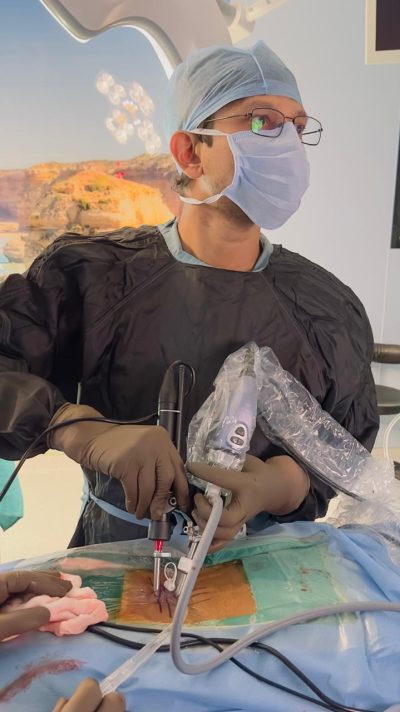
Endoscopic spine surgery is an advanced, ultra-minimally invasive surgical technique designed to treat spinal conditions using a tiny camera (endoscope) and micro-instruments.
Instead of making large incisions and cutting through stabilizing back muscles, a spine specialist makes a micro-incision—often smaller than 8 millimeters (about the size of a fingernail). Through this tiny port, an HD camera projects magnified, high-resolution views of the affected nerve roots and herniated discs directly onto an operating room monitor.
Because the surgeon works through a slender tubular portal, surrounding muscles and ligaments are gently dilated rather than cut. This minimizes blood loss, prevents structural instability, and significantly cuts down post-operative discomfort.
2. Why Traditional Spine Surgery Poses Challenges for NRIs
For working professionals and diaspora families abroad, opting for conventional open spine surgery presents several logistical and financial obstacles:
-
Extensive Waiting Times: In public healthcare setups like the NHS in the UK or healthcare networks in Canada, waiting times for specialist consultations and elective spine procedures can stretch across months or even years.
-
Prohibitive Healthcare Costs: In countries with private insurance models like the United States, high deductibles, co-pays, and out-of-network surgical costs can place a heavy burden on family savings.
-
Lengthy Workplace Leave: Traditional open spine procedures often require several days of inpatient hospital stays followed by 6 to 12 weeks of restricted mobility, making extended absence from work impractical.
-
Lack of Local Family Care: Recovering from open surgery without the physical and emotional support of extended family members adds extra stress during rehabilitation.
3. How Endoscopic Spine Surgery Solves the NRI Dilemma
Minimally invasive endoscopic technology fundamentally alters the surgical journey for international travelers.
The major clinical advantages include:
-
Microscopic Precision: Direct visualization allows the surgeon to decompress nerves without disturbing normal spinal anatomy.
-
Minimal Blood Loss: The procedure involves virtually zero blood loss, removing the need for transfusions.
-
Negligible Scarring: A tiny single stitch or waterproof bandage is all that remains post-surgery.
-
Lower Infection Risk: Smaller incisions and continuous saline irrigation substantially decrease the risk of hospital-acquired infections.
-
Swift Return to Flight: Most patients are cleared for commercial flights within 7 to 10 days post-procedure.
4. Conditions Effectively Treated with Spinal Endoscopy
Endoscopic spine surgery provides targeted relief for a broad range of degenerative and compressive spine disorders:
-
Lumbar Disc Herniation (Slip Disc): Removal of protruding disc material pressing on spinal nerves causing acute low back or leg pain.
-
Sciatica & Radiculopathy: Relieving sharp, shooting nerve pain traveling down the buttocks, thighs, and calves.
-
Spinal Canal Stenosis: Gentle trimming of thickened ligaments and bone spurs to widen narrowed nerve passages.
-
Foraminal Stenosis: Decompressing exiting nerve roots at the lateral exit zones of the vertebrae.
-
Recurrent Disc Herniation: Addressing re-herniations with minimal risk of disturbing previous scar tissue.
-
Cervical Disc Herniations: Relieving radiating neck, shoulder, and arm pain through targeted anterior or posterior cervical endoscopy.
5. Step-by-Step Medical Travel Timeline: Planning Surgery in Vadodara
Planning your surgical trip ensures seamless execution from initial digital assessment to safe return travel.
Phase 1: Pre-Arrival Digital Assessment (Weeks 1–2)
Before booking flights, share your recent MRI scans, CT reports, and medical history with a spine specialist in Vadodara via digital consultation. The surgical team will evaluate your imaging, establish candidacy, and formulate a customized treatment timeline.
Phase 2: Arrival and Pre-Op Evaluation (Days 1–2)
Upon arriving in Vadodara, an in-person physical evaluation, baseline blood work, and pre-anesthetic clearance are completed. High-resolution local diagnostic imaging can be updated if previous scans are outdated.
Phase 3: Procedure and Daycare Observation (Day 3)
The endoscopic spine surgery is performed in an advanced operating theater equipped with HD visualization towers and intraoperative fluoroscopy. Most procedures take between 45 to 90 minutes. Patients are mobilized within hours and often discharged the same evening or the following morning.
Phase 4: Rest and Local Follow-Up (Days 4–7)
Spend a few comfortable days resting at home or in local accommodations. A routine wound check and initial physical therapy assessment ensure proper postural biomechanics and nerve recovery.
Phase 5: Fit-to-Fly Clearance and Departure (Days 8–10)
Following a final clinical check with the best spine surgeon in Vadodara, you receive official medical clearance, travel guidelines, and your digital recovery exercise plan before boarding your international flight.
6. The Procedure: What Happens During Surgery?
Understanding each stage of the procedure helps alleviate anxiety:
-
Patient Preparation: You are comfortably positioned on a specialized radiolucent spinal table. Local anesthesia with conscious sedation is administered, keeping you relaxed and pain-free.
-
Precision Navigation: Under real-time X-ray (C-arm) guidance, a fine guide needle is pinpointed to the exact location of nerve compression.
-
Endoscope Placement: A dilating tube followed by an HD spinal endoscope is placed directly through the tiny entry point.
-
Targeted Decompression: Using micro-graspers, radiofrequency probes, and micro-cutters, the herniated disc fragment or bone spur is removed, instantly releasing pressure from the trapped nerve.
-
Closure: The instruments are withdrawn, and the micro-puncture is closed with a single dissolvable stitch and a sterile dressing.
7. Post-Operative Care, Rehabilitation, and Flying Back Safely1. What Is Endoscopic Spine Surgery?
Recovery after endoscopic spine intervention is rapid, but structured precautions ensure long-term spinal health.
Immediate Post-Op Care
-
Early Mobilization: You will be encouraged to stand and take gentle steps within 3 to 4 hours post-procedure.
-
Pain Management: Minimal tissue trauma translates to mild post-surgical soreness, readily managed with basic oral medications.
Flying Back Checklist for NRIs
-
Flight Timing: Plan to fly 7 to 10 days after your procedure to ensure wound healing and mobility comfort.
-
In-Flight Movement: Take short walks down the airplane aisle every 60 to 90 minutes on long-haul flights to maintain lower-limb circulation.
-
Lumbar Support: Place a small ergonomic lumbar cushion behind your lower back during your flight.
-
Luggage Management: Arrange for airport porter assistance and avoid lifting heavy suitcases during the first 4 to 6 weeks.
8. Why Vadodara Is the Preferred Spine Care Hub for NRIs
Vadodara has established itself as a premier medical hub in Gujarat, attracting patients across the diaspora:
-
Excellent Connectivity: Direct domestic flights and smooth expressway links connect Vadodara to international transit hubs like Mumbai and Ahmedabad.
-
Concentration of Expertise: The city houses leading super-specialty hospitals and highly experienced spine specialists skilled in full-endoscopic techniques.
-
Stress-Free Environment: Unlike high-density tier-1 metros, Vadodara offers a calm, green, and culturally familiar environment that supports peaceful post-operative recovery.
-
Comprehensive Post-Care Teleconsultations: Continuous digital follow-ups ensure that your surgeon remains accessible even after you return to your home country.
9. Frequently Asked Questions (FAQs)
 Q1. How long do I need to stay in Vadodara for endoscopic spine surgery?
Most NRIs plan a trip lasting 10 to 14 days. This window provides adequate time for initial pre-operative evaluations, surgery, daycare recovery, stitch check, and final fit-to-fly clearance.
Q2. Is endoscopic spine surgery as effective as open surgery?
Yes. Clinical studies show that full-endoscopic spine surgery delivers equivalent or superior decompression results to open microdiscectomy, with significantly reduced blood loss, less tissue disruption, and faster functional rehabilitation.
Q3. When can I resume work after returning abroad?
Patients with desk-based or remote work can typically resume duties within 1 to 2 weeks post-surgery. Those involved in active or heavy physical work should gradually ramp up over 4 to 6 weeks under physician guidance.
Q4. How do I get started with an assessment before traveling?
You can initiate the process by sending your recent MRI reports and clinical summaries for an online review with a spine specialist in Vadodara to confirm if endoscopic intervention is suitable for your condition.
10.Conclusion & Next Steps
Living with debilitating back or nerve pain while managing a demanding life abroad is no longer necessary. With modern endoscopic spine surgery, NRIs can access cutting-edge, muscle-sparing spinal decompression without enduring long hospital stays or months of downtime.
Vadodara combines international-standard clinical precision, accessible specialists, and compassionate local care—enabling you to regain pain-free mobility during your visit home.
Take the First Step Toward Pain-Free Living
If you or a loved one abroad are struggling with severe disc herniation, sciatica, or chronic back pain, schedule a priority digital consultation.
Get your MRI scans evaluated by the best spine surgeon in Vadodara and plan a smooth, rapid path to recovery today.
