
Introduction
Living with chronic back pain can feel like carrying an invisible weight that dictates every move you make. Whether it is a sharp shooting pain down your leg or a dull ache that refuses to leave your lower back, spinal issues can bring life to a grinding halt.
For decades, the mere mention of “spine surgery” was enough to strike fear into the hearts of patients. Traditional open back surgery involved large incisions, significant muscle disruption, extended hospital stays, and agonizingly slow recovery periods.
Today, the medical landscape has completely transformed. Endoscopic spine surgery is at the forefront of this medical revolution, allowing surgeons to fix complex spinal problems through an incision smaller than a dime.
In this comprehensive patient guide, we will explore exactly how this ultra-modern procedure navigates your spine safely. We will specifically look at the growing accessibility of advanced spine treatment in Vadodara, breaking down costs, recovery timelines, and why this minimally invasive approach is becoming the gold standard for long-term pain relief.
Table of Contents
-
The New Era of Spine Care in Vadodara
-
What Exactly is Endoscopic Spine Surgery?
-
Step-by-Step: How the Procedure Navigates the Spine Safely
-
Endoscopic vs. Traditional Open Surgery: A Detailed Comparison
-
Crucial Symptoms: When Should You Seek Help?
-
Common Spinal Conditions Treated Endoscopically
-
Your Post-Surgery Recovery Timeline
-
Frequently Asked Questions (FAQs)
-
Conclusion & Next Steps
The New Era of Spine Care in Vadodara
Gujarat has rapidly evolved into a major healthcare hub, and Vadodara stands out as a prime destination for specialized medical care. Patients no longer need to travel to Mumbai or Delhi for world-class orthopedic interventions.
From advanced multi-speciality centers in Akota and Gotri to dedicated spine clinics in Alkapuri, the city is equipped with state-of-the-art medical infrastructure.
Why Patients Choose Vadodara
There is a massive shift toward localized, high-quality care. Vadodara offers a unique blend of highly experienced surgeons and affordable treatment costs compared to metropolitan giants.
The accessibility of advanced diagnostics—like high-resolution MRIs and 3D spinal mapping—means that patients can get evaluated and treated within a closely connected ecosystem. Furthermore, the supportive post-operative care available in the city, including specialized physiotherapy centers, makes it an ideal place to heal.
If you are looking for long-term relief, finding a trusted spine specialist in Vadodara is easier and more reliable than ever before.
What Exactly is Endoscopic Spine Surgery?
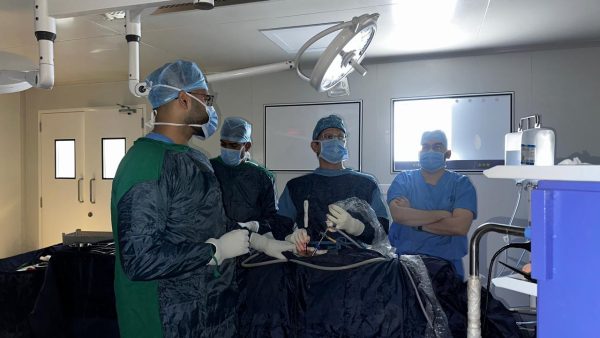
To appreciate the safety and brilliance of endoscopic spine surgery, we must first understand what it is.
At its core, it is an advanced, ultra-minimally invasive surgical technique used to relieve chronic back and leg pain. It relies on a specialized device called an endoscope—a high-definition camera equipped with a powerful light source and microscopic surgical tools.
The Power of the Endoscope
Instead of cutting open the back to expose the spinal column, the surgeon creates a micro-incision (usually less than 7 millimeters). A thin tubular device called a trocar is gently slipped through the natural spaces between your muscle fibers.
The endoscope is fed through this tube, acting as the surgeon’s “eyes” inside your body. It projects highly magnified, brilliantly illuminated images of your spinal nerves, discs, and bones onto a large surgical monitor.
Precision Over Power
This technique is all about finesse, not force. Because the camera is placed directly at the site of the problem—right next to the painful nerve—the surgeon does not need to remove large amounts of stabilizing bone or tear through healthy muscles just to see what they are doing.
This level of targeted precision is exactly why the procedure is exceptionally safe.
Step-by-Step: How the Procedure Navigates the Spine Safely
How does a surgeon fix a slipped disc without tearing through the heavy muscles of your back? The secret lies in a concept called “tissue sparing.”
Here is a step-by-step look at how endoscopic spine surgery prioritizes your safety at every phase:
Step 1: Pinpoint Anesthesia
Unlike traditional surgeries that require deep general anesthesia, endoscopic procedures can often be performed under local anesthesia with conscious sedation. This means you are completely pain-free and relaxed, but responsive enough to provide real-time feedback to the surgeon, adding a massive layer of neurological safety.
Step 2: The Micro-Incision
Guided by continuous X-ray imaging (fluoroscopy), the surgeon locates the exact target area. A tiny 7mm incision is made. This is so small that it is often covered by a single bandage after the surgery.
Step 3: Gentle Muscle Dilation
Instead of cutting muscles off the bone, the surgeon uses sequential dilators. These tiny tubes gently push the muscle fibers apart, creating a temporary working tunnel. By keeping the muscles intact, post-operative back spasms are virtually eliminated.
Step 4: The Targeted Fix
With the HD endoscope in place, the surgeon clearly sees the herniated disc material or bone spur pressing on your nerve. Using micro-instruments inserted through the same tube, they carefully remove the offending tissue. The healthy part of the disc is left completely untouched.
Step 5: Clean Exit and Closure
Once the nerve is confirmed to be free and relaxed, the tube is smoothly withdrawn. The muscle fibers naturally snap back into their original position. The tiny skin incision is closed with a single stitch or steri-strip.
Endoscopic vs. Traditional Open Surgery: A Detailed Comparison
If you are weighing your options, understanding the stark differences between these two approaches is critical.
Traditional open spine surgery, while sometimes necessary for massive trauma or severe deformities, is inherently destructive. It requires large incisions, stripping muscles away from the spine, and manipulating delicate nerves to access the damaged discs.
Endoscopic surgery shifts the paradigm entirely.
Surgical Outcome Comparison
| Traditional Open | Endoscopic | |
|---|---|---|
| Incision Size | 5-6 inches | ✓ < 0.5 inches |
| Hospital Stay | 3-5 Days | ✓ Same Day / 1 Day |
| Recovery Time | 3-6 Months | ✓ 3-6 Weeks |
| Muscle Damage | High (retracted) | ✓ Minimal (dilated) |
| Blood Loss | Moderate/High | ✓ Minimal |
The Collateral Damage Factor
The biggest advantage of the endoscopic approach is the lack of “collateral damage.” Because the natural anatomy of your back is preserved, patients do not suffer from the intense “surgery pain” that usually accompanies open procedures.
By eliminating extensive muscle cutting, the risk of post-surgical infection plummets. Furthermore, because spinal stability is maintained, the chances of needing a complex spinal fusion later in life are significantly reduced.
Crucial Symptoms: When Should You Seek Help?
Most back pain resolves on its own with rest and physical therapy. However, certain symptoms indicate nerve compression that requires expert medical evaluation.
You should consult a top spine specialist in Vadodara if you experience any of the following “red flag” symptoms:
-
Radiating Leg Pain (Sciatica): A sharp, electric shock-like pain shooting down your buttock, thigh, or calf.
-
Numbness and Tingling: A persistent “pins and needles” sensation in your feet or toes.
-
Muscle Weakness: Difficulty lifting your foot (drop foot), tripping often, or feeling your legs give out while walking.
-
Pain Worsened by Posture: Intense pain when standing up straight or walking, which is only relieved by leaning forward.
-
Failure of Conservative Care: You have tried medications, physical therapy, and rest for more than six weeks with no real improvement.
Ignoring these symptoms can lead to permanent nerve damage. Early diagnosis through a proper MRI is crucial.
Common Spinal Conditions Treated Endoscopically
Not every spine problem can be fixed with an endoscope, but the technology has advanced so much that it now covers the vast majority of common degenerative conditions.
1. Herniated or Slipped Discs
The rubbery cushions between your vertebrae can tear, allowing the soft inner jelly to leak out and compress a nerve. The endoscope allows the surgeon to pluck out only the leaked portion, instantly relieving the pressure.
2. Spinal Stenosis
As we age, ligaments thicken and bone spurs develop, narrowing the canal where spinal nerves travel. Endoscopic techniques can safely shave away these overgrowths to create more breathing room for the nerves.
3. Foraminal Narrowing
The “foramen” are the small exit doors on the sides of the spine where nerves branch out to your legs. If these doors become clogged by arthritis, an endoscopic drill can safely widen them without destabilizing the spine.
Your Post-Surgery Recovery Timeline
The most magical part of endoscopic spine surgery is the recovery. Because your muscles were not butchered, your body bounces back with surprising speed.
Day 1: The Immediate Aftermath
The vast majority of patients are walking within two to three hours of waking up. The shooting leg pain is usually gone immediately. You will likely be discharged and sleeping in your own bed that same night, or by the very next morning.
Week 1-2: The Healing Phase
You will have some mild soreness at the incision site, similar to a deep bruise. You can walk, climb stairs carefully, and perform basic self-care. Bending, heavy lifting, and aggressive twisting are strictly prohibited.
Week 3-6: Returning to Normalcy
Most patients return to desk jobs within one to two weeks. By week four, supervised physical therapy begins. This is crucial for strengthening the core muscles that support your newly freed nerves.
Month 3 and Beyond
You can gradually return to sports, heavy physical labor, and full dynamic activities. The pain that once held you hostage is a thing of the past.
According to global medical standards, minimally invasive procedures drastically reduce post-operative complications and opioid dependency. For more robust clinical data on these benefits.
Frequently Asked Questions (FAQs)
1. Is endoscopic spine surgery safer than traditional laser surgery? Yes. Laser surgery essentially burns away tissue and can cause unpredictable heat damage to surrounding nerves. Endoscopic surgery uses mechanical micro-tools combined with a high-definition camera, offering vastly superior precision, control, and safety.
2. How do I know if I need to see a spine specialist in Vadodara? If your back pain is accompanied by leg numbness, shooting electrical pain down your thigh, weakness in your feet, or loss of bowel/bladder control, you must consult a specialist immediately to prevent permanent nerve damage.
3. Will my back pain come back after the surgery? Endoscopic surgery has a high success rate (85-90%) for relieving nerve compression pain (leg pain). However, spine health is a lifelong commitment. Failing to maintain a strong core, carrying excess body weight, or returning to poor ergonomic habits can cause other discs to herniate in the future.
4. Is the cost of spine treatment in Vadodara covered by health insurance? Absolutely. Almost all major cashless mediclaim policies and corporate health insurance plans cover endoscopic spine surgeries, as they are recognized as medically necessary procedures. It is always wise to verify the exact coverage cap and co-pay terms with your TPA prior to admission.
5. Am I too old for an endoscopic spine procedure? Because this surgery involves minimal blood loss and can often be done under local or regional anesthesia, it is incredibly safe for elderly patients. In fact, it is often the preferred choice for senior citizens who are too frail to withstand the trauma of traditional open spine surgery.
Conclusion & Next Steps
Living with debilitating spine issues is exhausting, but you no longer have to settle for a life defined by pain. Endoscopic spine surgery is a marvel of modern medicine—a delicate, precise, and remarkably safe way to reclaim your mobility.
By choosing to undergo this advanced procedure in Vadodara, you are combining state-of-the-art medical technology with accessible, patient-first care. The days of agonizing months-long recoveries are gone; the future of spine care is here, and it is minimally invasive.
If you are tired of merely managing your symptoms and are ready to address the root cause of your pain, do not wait for the nerve damage to become permanent. Take control of your health today.
