
Living with severe, chronic back pain is difficult. However, living with debilitating pain that simply does not show up on a standard X-ray is incredibly frustrating.
You might feel a sharp pinch, a numb leg, or a constant burning sensation. Yet, initial clinical tests might confidently claim that “everything looks completely normal.”
This is an all-too-common scenario in orthopedic medicine. The human spine is an immensely complex network of bones, delicate nerves, and spongy discs.
When something goes wrong deep inside this intricate structure, it requires specialized, investigative expertise to uncover the truth.
In this comprehensive guide, we will explore exactly how surgeons navigate hidden spine problems. We will take a deep dive into the diagnostic secrets, advanced imaging technologies, and modern treatments available today.
If you are a resident of Gujarat desperately looking for relief, understanding this medical process will help you make highly informed decisions.
Finding the right spine treatment in Vadodara can be the crucial bridge between endless chronic pain and a healthy, active, and joyful life.
Let’s decode the medical mysteries of the human spine and show you the exact steps medical experts take to finally get to the root of your invisible pain.
Table of Contents
-
Understanding the Complex Anatomy of Your Spine
-
The Silent Agony: 7 Symptoms of Hidden Spine Issues
-
Why Hidden Spinal Conditions Are Often Misdiagnosed
-
The Diagnostic Toolkit: How Surgeons Navigate Hidden Spine Problems
-
Preparing for Your Spine Consultation in Vadodara
-
Advanced Spine Treatment in Vadodara: Surgical vs. Non-Surgical
-
The Road to Recovery: Life After Spine Treatment
-
Frequently Asked Questions (FAQs)
-
Conclusion and Next Steps
Understanding the Complex Anatomy of Your Spine
Before we can truly understand the diagnosis, we need to understand the physical battlefield. Your spine is not just a stack of bones holding you upright.
It is the primary, vital highway of your central nervous system. It consists of 33 individual bones called vertebrae.
These bones are separated by spongy, shock-absorbing discs that allow you to bend, twist, and lift. Right through the center of these protective bones runs the fragile spinal cord.
Branching out from the spinal cord are tiny, delicate nerve roots that travel outwards to your arms, chest, and legs. Because this physical space is so tightly packed, the margin for error is essentially zero.
Even a single millimeter of inflammation or a microscopic disc bulge can cause immense, paralyzing pain. A tiny bone spur, totally invisible to the naked eye, can press against a nerve root and cause your entire leg to go numb.
This microscopic margin of error is exactly why standard medical tests often fail to find the problem. It is also why the science of how surgeons navigate hidden spine problems is so critical for patient recovery.
The Silent Agony: 7 Symptoms of Hidden Spine Issues
Often, the primary source of your pain isn’t located where you actually feel the pain. This medical phenomenon is known as “referred pain.”
Referred pain makes diagnosing spine issues very tricky for general practitioners. Here are the most common silent symptoms that signal a deeper, hidden spinal problem:
-
Sciatica (Radiating Leg Pain): A sharp, electric shock-like pain that travels from your lower back, through your buttocks, and down the back of your leg.
-
Pins and Needles: Chronic tingling or a “falling asleep” sensation in your fingers or toes. This is a classic sign of unseen nerve compression.
-
Foot Drop: Difficulty lifting the front part of your foot. If you find yourself dragging your toes while walking, a nerve in your lower spine is likely severely pinched.
-
Positional Agony: If standing up relieves your back pain, but sitting down makes it absolutely unbearable, it usually indicates hidden pressure on your lumbar discs.
-
Loss of Fine Motor Skills: Struggling to button your shirt, tie your shoelaces, or hold a coffee cup can be a dangerous red flag for cervical spinal stenosis.
-
Unexplained Muscle Weakness: If one of your legs or arms feels significantly weaker than the other without any physical injury, a spinal nerve is likely being choked off.
-
Bowel or Bladder Dysfunction: This is a severe medical emergency known as Cauda Equina Syndrome. It requires immediate, urgent attention from the best spine surgeon in Vadodara.
Why Hidden Spinal Conditions Are Often Misdiagnosed
Many patients suffer for years because their hidden spine conditions are repeatedly misdiagnosed as simple muscle strains or general fatigue.
The biggest culprit for this delay is an over-reliance on basic X-rays. An X-ray is excellent at showing dense bone, making it perfect for spotting a traumatic fracture.
However, an X-ray is practically blind when it comes to soft tissues. It cannot see a bulging disc, a torn ligament, or a compressed nerve root.
Furthermore, pain is highly subjective. A patient might describe their nerve pain as a “muscle ache,” leading a doctor to prescribe basic muscle relaxants instead of ordering advanced imaging.
To bypass these pitfalls, top specialists rely on a multi-layered diagnostic approach to reveal what standard tests miss.
The Diagnostic Toolkit: How Surgeons Navigate Hidden Spine Problems
When you visit an advanced orthopedic clinic complaining of severe, untraceable pain, the doctor does not just guess.
The process of uncovering the root cause involves a highly systematic, technology-driven approach. Here is exactly how surgeons navigate hidden spine problems using modern medical science.
1. The Detailed Clinical and Neurological Examination
Before any massive imaging machines are involved, a thorough physical exam is absolutely crucial. A skilled specialist will test your reflexes, muscle strength, and sensory perception.
They will ask you to bend forward, walk on your toes, and identify exactly where you feel numbness when pricked with a tiny pin. This physical mapping helps them isolate which specific spinal nerve root is affected.
2. High-Resolution Magnetic Resonance Imaging (MRI)
While X-rays only show bones, an MRI reveals all the hidden soft tissues. It beautifully displays the spinal cord, the nerve roots, and the gelatinous discs between your vertebrae.
If a disc is bulging, herniated, or torn, the MRI will catch it immediately. This is the global gold standard for spotting soft-tissue issues that cause excruciating pain.
3. CT Scans Combined with Myelogram
Sometimes, an MRI isn’t enough, or a patient might have a pacemaker that strictly prevents them from getting one safely.
In these unique cases, doctors use a CT scan combined with a myelogram. A special, safe contrast dye is injected directly into the spinal canal.
The CT scan then takes highly detailed cross-sectional images, lighting up the exact spots where nerves are being pinched by hidden bone spurs or overgrown ligaments.
4. Beyond the Scan: How Surgeons Navigate Hidden Spine Problems Using Nerve Tests
If a scan shows multiple minor structural issues, how does the surgeon know which specific one is actually causing your daily pain?
This is exactly where an EMG (Electromyography) comes in. It tests the electrical activity of your muscles and the speed at which your nerves transmit signals.
By finding the exact nerve that is transmitting signals too slowly, the surgeon can confidently pinpoint the hidden problem area.
Preparing for Your Spine Consultation in Vadodara
Over the last decade, Vadodara has rapidly emerged as a premier healthcare hub in the state of Gujarat.
Patients no longer need to travel to Mumbai, Ahmedabad, or Delhi for world-class orthopedic and neurological care.
Whether you live near Alkapuri, Makarpura, Manjalpur, or Jetalpur Road, you have immediate access to cutting-edge medical facilities.
To get the most out of your visit to a spine specialist in Vadodara, you should come prepared.
Start a “pain journal” a week before your appointment. Note exactly what time your pain peaks, what physical activities trigger it, and what makes it feel better.
Bring all previous medical records, especially old X-rays and MRI reports. The more history you provide, the easier it is for the specialist to solve your medical mystery.
Advanced Spine Treatment in Vadodara: Surgical vs. Non-Surgical
Once the hidden problem is finally exposed, the next exciting step is fixing it permanently.
Most people fear that seeing a surgeon automatically means they will be forced to undergo massive surgery. However, modern, ethical spine care always starts with conservative measures.
Phase 1: Powerful Non-Surgical Solutions
-
Targeted Clinical Physiotherapy: Strengthening the deep core muscles around your spine can naturally decompress pinched nerves over time.
-
Epidural Steroid Injections: Delivering powerful anti-inflammatory medication directly into the epidural space of the spine to calm angry, swollen nerves instantly.
-
Radiofrequency Ablation: Using targeted heat to temporarily disable the tiny nerve endings that transmit pain signals from your arthritic spinal joints.
Phase 2: Minimally Invasive Spine Surgery (MISS)
If conservative treatments fail after several months of trying, surgery might be necessary. Today, spine surgery is a far cry from the massive, painful procedures of the past.
-
Microdiscectomy: Using a tiny, one-inch incision and a powerful microscope, the surgeon gently removes only the portion of a herniated disc that is pressing on a nerve.
-
Endoscopic Spine Surgery: The surgeon uses an HD camera attached to a thin tube. This allows them to fix the spine without cutting through major back muscles, resulting in minimal scarring.
-
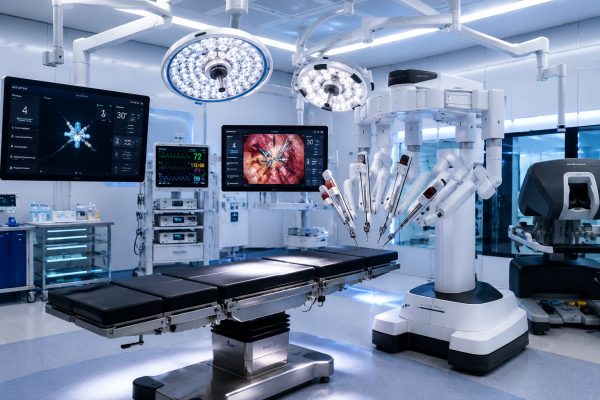
Robotic Spinal Fusion: If the spine is structurally unstable due to severe degeneration, the surgeon will fuse two vertebrae together. Modern hospitals in Vadodara now use robotic guidance for perfect, risk-free screw placement.
The Road to Recovery: Life After Spine Treatment
Understanding how surgeons navigate hidden spine problems is only half of the journey. The other, equally important half is how your body heals.
Recovery times have drastically improved in recent years, entirely thanks to the rise of minimally invasive surgical techniques.
For a standard microdiscectomy, many patients are walking the hospital halls within hours of waking up. They can usually return to light office work within just two to three weeks.
Spinal fusion requires a bit more patience. It takes several months for the bones to fuse completely and strongly. During this vital time, you will work closely with a physical therapist to rebuild your core strength safely.
Living in Vadodara offers a distinct, massive advantage here. Having access to continuous, localized physical therapy without the stress of long-distance highway travel significantly improves your final recovery outcomes.
Frequently Asked Questions (FAQs)
1. When should I immediately visit a spine specialist in Vadodara? You should seek immediate emergency medical help if your back pain is accompanied by a sudden loss of bowel or bladder control, severe weakness in your legs, or a total loss of sensation in your groin area.
2. Will a standard MRI scan show absolutely all hidden spine problems? While an MRI is excellent for viewing soft tissues and discs, it isn’t completely perfect. Sometimes, doctors must use diagnostic nerve blocks or EMGs to figure out exactly how surgeons navigate hidden spine problems when MRI results are visually ambiguous.
3. Is minimally invasive spine surgery highly painful? Because minimally invasive procedures do not tear through large, supporting muscle groups, the post-operative pain is significantly less than traditional open back surgery. Most patients comfortably manage their pain with basic oral medications after the first few days.
4. How long does a typical spine surgery take to heal completely? Recovery heavily depends on the specific procedure performed. A simple decompression may require 3 to 6 weeks of restricted activity. A complex spinal fusion, however, may take 3 to 6 months before you can safely return to heavy physical labor.
5. How do I find the absolute best spine surgeon in Vadodara? Look for a specialist who is fellowship-trained specifically in complex spine surgery, has extensive proven experience with minimally invasive techniques, and operates out of a highly-rated, technologically advanced local hospital.
Conclusion and Next Steps
Chronic back and neck pain should never be accepted as just a “normal part of getting older.”
As we have thoroughly explored, medical science has evolved incredibly over the last decade. Understanding exactly how surgeons navigate hidden spine problems proves that even the most mysterious, invisible pain has a root cause that can be confidently isolated and treated.
From advanced, high-resolution MRI diagnostics to targeted nerve conduction studies, the modern tools available today ensure that nothing stays hidden for long.
If you are struggling with daily, draining pain, you do not have to suffer in silence any longer. Vadodara is home to world-class medical facilities and highly skilled, compassionate experts who are ready to help you reclaim your active life.
Take the very first step toward a pain-free, joyful future today. If you need an expert, thorough evaluation, click here to learn more about our comprehensive spine treatment services and schedule your priority consultation right now.
