
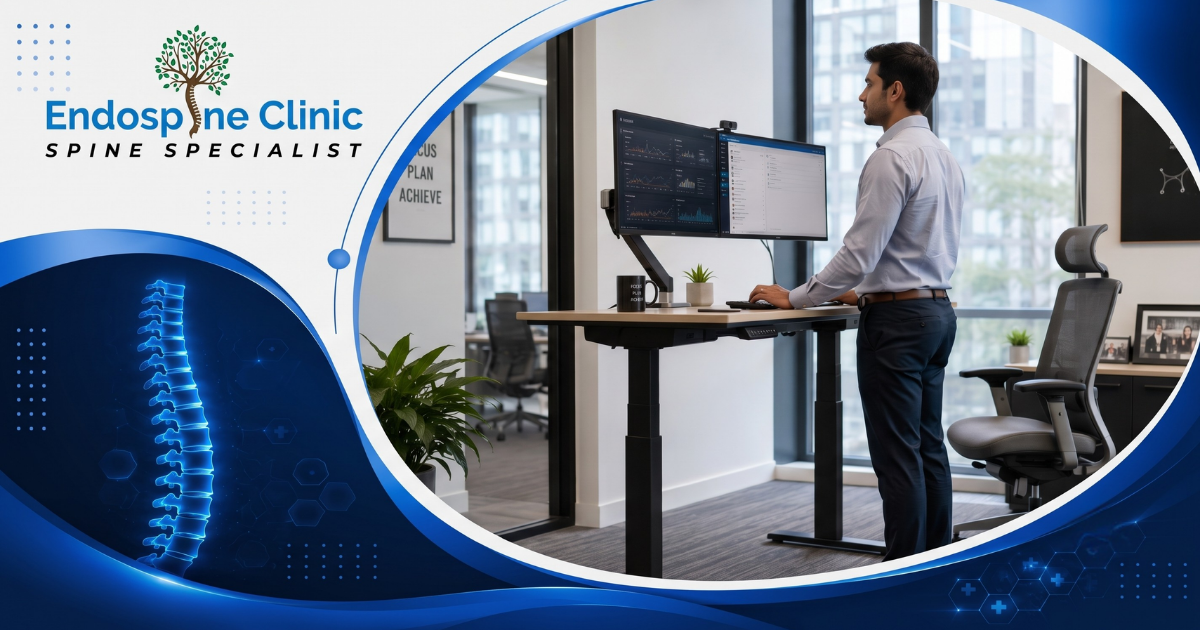
If you spend eight to ten hours a day sitting at a desk, you are not alone in experiencing the sharp, shooting pain of sciatica. As Vadodara rapidly expands its corporate hubs and IT sectors, more professionals find themselves glued to their office chairs.
While climbing the corporate ladder in areas like Alkapuri or the Sarabhai compound is rewarding, it often comes at a physical price. Long hours of sitting can compress the sciatic nerve, leading to immense discomfort.
Managing sciatica at work has become a critical survival skill for today’s desk-bound professionals. Ignoring the early signs of nerve compression can turn a mild annoyance into a debilitating condition that hinders both your productivity and your personal life.
Fortunately, you do not have to resign yourself to a career of chronic pain. With the right ergonomic adjustments, strategic movements, and professional guidance, you can reclaim your comfort.
This comprehensive guide will walk you through actionable, everyday strategies for managing sciatica at work, ensuring your desk job does not ruin your spinal health.
Table of Contents
-
The Corporate Trap: Why Desk Jobs Trigger Sciatica
-
Red Flags: Are You Experiencing Sciatica?
-
Desk Job Survival Guide: Managing Sciatica at Work
-
Step 1: Master Your Ergonomic Setup
-
Step 2: Perfect Your Sitting Posture
-
Step 3: Implement the 30-Minute Rule
-
Step 4: Essential Office Stretches
-
-
Seeking Professional Spine Treatment in Vadodara
-
The Benefits of Early Action and Recovery
-
Frequently Asked Questions (FAQs)
-
Conclusion: Take Control of Your Spinal Health
The Corporate Trap: Why Desk Jobs Trigger Sciatica
The human spine was designed for movement, flexibility, and bearing weight in a dynamic way. It was not designed to remain frozen in a C-shaped slump in front of a glowing monitor for hours on end.
When you sit for prolonged periods, the discs in your lower back bear significantly more pressure than when you are standing. This continuous pressure can cause the discs to bulge or herniate.
Once a disc bulges, it can press directly against the sciatic nerve, which runs from your lower back down through your hips, buttocks, and legs. This mechanical compression is the primary culprit behind the sharp pain you feel.
Furthermore, constant sitting weakens your core and gluteal muscles. When these crucial stabilizing muscles lose their strength, your lower back is forced to take on an unnatural load, accelerating wear and tear on your spine.
Red Flags: Are You Experiencing Sciatica?
Before diving into solutions, it is crucial to understand what sciatica actually feels like. Not all lower back pain is sciatica, and misidentifying your symptoms can delay proper healing.
Sciatica is characterized by its distinct path of travel. The pain typically originates in the lumbar (lower) spine and radiates down one side of the body.
You might be dealing with sciatica if you experience a sharp, burning sensation that shoots down your buttock and into the back of your thigh. Some patients describe it as feeling like an electric shock that flares up when they sneeze, cough, or sit in a specific position.
Numbness, tingling, or muscle weakness in the affected leg or foot are also common red flags. If you notice these symptoms becoming progressively worse during your workday, it is time to take immediate action and consider reaching out to a local expert.
Desk Job Survival Guide: Managing Sciatica at Work
Effectively managing sciatica at work requires a proactive approach to your daily environment. You must transform your workspace from a pain-inducing trap into a spine-supporting sanctuary.
Step 1: Master Your Ergonomic Setup
Your chair and desk are your primary tools, and they need to be tailored to your body. Begin by adjusting your chair height so your feet rest perfectly flat on the floor.
If your feet dangle or rest awkwardly, use a sturdy footrest to ensure your knees remain at or slightly below your hip level. This simple adjustment immediately reduces the strain on your lower lumbar spine.
Next, evaluate your monitor height. The top third of your screen should be directly at your eye level. Looking down constantly rounds your shoulders and strains your neck, pulling your entire spine out of alignment.
Ensure your keyboard and mouse are close enough that your elbows remain comfortably bent at a 90-degree angle by your sides. Reaching too far forward places unnecessary leverage on your lower back muscles.
Step 2: Perfect Your Sitting Posture
Even the most expensive ergonomic chair cannot save you if your posture is poor. Avoid the temptation to cross your legs while working, as this shifts your pelvis and creates an uneven distribution of weight on your sciatic nerve.
Sit all the way back in your chair, utilizing the backrest for lumbar support. If your chair lacks proper lower back support, place a rolled-up towel or a small cushion directly behind your natural spinal curve.
Keep your shoulders relaxed and pulled slightly back. Imagine a string pulling the crown of your head straight up toward the ceiling. Maintaining this neutral spine position minimizes nerve compression.
Step 3: Implement the 30-Minute Rule
Motion is lotion for your spine. The golden rule for managing sciatica at work is to never remain seated for more than 30 minutes at a time.
Set a recurring timer on your phone or computer to remind you to stand up. You do not need to take a long break; simply standing up, shaking out your legs, and resetting your posture takes less than sixty seconds.
Consider adopting a sit-stand desk if your office allows it. Alternating between sitting and standing throughout the day dramatically reduces cumulative pressure on your lower back and keeps your blood circulating freely.
Step 4: Essential Office Stretches
You can perform subtle but highly effective stretches right at your desk to relieve tension.
The Seated Pigeon Pose: While seated, bring your right ankle to rest on your left knee. Keeping your back perfectly straight, gently lean forward until you feel a deep stretch in your right glute. Hold for 30 seconds, breathe deeply, and switch sides.
The Standing Extension: Stand up straight with your feet shoulder-width apart. Place your hands on your lower back for support and gently lean backward, arching your spine slightly. This helps reverse the forward-leaning posture you hold at your desk.
Seated Spinal Twist: Sit sideways in your chair. With your feet flat, gently twist your torso to hold the back of the chair. Use your arms to deepen the stretch smoothly without jerking. This relieves tension built up in the lumbar region.
For more comprehensive medical insights on nerve pain and safe stretching limits.
Seeking Professional Spine Treatment in Vadodara
While ergonomic adjustments and stretches are excellent for daily management, chronic or worsening pain requires expert medical intervention. You should never ignore severe nerve pain.
Vadodara is home to world-class medical facilities and highly trained specialists who understand the unique toll that corporate lifestyles take on the human body. Trusting local expertise means you have access to continuous, personalized care without the stress of traveling far from home.
When you consult the best spine surgeon in Vadodara, they will conduct a thorough diagnostic evaluation. This often involves advanced imaging like MRI or X-rays to pinpoint exactly where the sciatic nerve is being compressed.
A reputable spine specialist in Vadodara will rarely jump straight to surgery. Modern spinal care prioritizes conservative treatments first. This may include targeted physiotherapy, anti-inflammatory medications, or specialized epidural injections to quickly reduce swelling around the nerve.
Choosing local care also ensures your treatment plan is highly accessible. Easy access to follow-up appointments and physical therapy sessions is crucial for a smooth, uninterrupted recovery process.
If your daily life is being impacted, it is time to explore professional spine treatment in Vadodara. An expert team can provide a tailored roadmap to get you back to your pain-free self.
The Benefits of Early Action and Recovery

Addressing sciatic pain early rather than pushing through the discomfort yields massive dividends for your overall well-being. Early intervention prevents permanent nerve damage, which can lead to chronic weakness or loss of sensation in your legs.
By actively managing sciatica at work, you will notice a sharp increase in your daily focus and productivity. Pain is a massive distraction; removing it allows you to concentrate fully on your career goals.
Furthermore, early treatment often means avoiding invasive procedures down the line. A proactive approach emphasizing physical therapy and ergonomic correction builds a stronger, more resilient core that protects your spine for years to come.
Your mood and mental health will also improve significantly. Chronic pain is exhausting and can lead to burnout and frustration. Reclaiming your physical comfort is the first step in reclaiming your overall energy and enthusiasm.
Frequently Asked Questions (FAQs)
1. Can a desk job cause permanent sciatica? While a desk job itself doesn’t cause a permanent disease, prolonged sitting without ergonomic support can lead to chronic disc herniation. If left entirely untreated, prolonged nerve compression can result in long-term nerve damage.
2. How do I know if I need to see the best spine surgeon in Vadodara? You should seek a specialist if your pain lasts longer than a week, becomes progressively worse, is accompanied by sudden leg weakness, or causes loss of bowel or bladder control. These are medical emergencies requiring immediate expert care.
3. Is standing all day better than sitting for sciatica? Not necessarily. While standing relieves the specific pressure of sitting, standing in one place for 8 hours can trigger different types of lower back fatigue. The key to managing sciatica at work is alternating between sitting, standing, and walking.
4. What should I expect during my first visit to a spine specialist in Vadodara? Your specialist will review your medical history, discuss your daily work habits, and perform a physical exam to check your reflexes and muscle strength. They may also order imaging tests like an MRI to accurately diagnose the root cause of your sciatica.
Conclusion: Take Control of Your Spinal Health
Surviving your desk job should not mean sacrificing your physical health. The modern corporate environment demands a lot of your time, but you have the power to control how your body responds to it.
By implementing strict ergonomic rules, prioritizing movement, and listening to your body’s early warning signs, managing sciatica at work becomes a seamless part of your daily routine. Do not let untreated nerve pain dictate your career or your lifestyle.
If you are tired of struggling through your workday with persistent lower back and leg pain, it is time to take decisive action. Proper diagnosis and a customized recovery plan can change your life entirely.
Do not wait for the pain to become unbearable. Take the first step toward a pain-free workday and schedule a consultation with the premier experts in spinal health today. Your spine supports you every day—make sure you support it in return.
