
If you have ever woken up with a sudden, sharp pain in your back, you know how paralyzing it can be. Reaching for a dropped pen, twisting the wrong way during a workout, or even just coughing can suddenly trigger intense discomfort.
When this happens, a common question immediately comes to mind: Is this just a simple pulled muscle, or did I severely damage my spine? Understanding the difference between a Muscle Strain vs Slipped Disc is crucial. One requires a few days of rest and a heat pack, while the other might require advanced medical intervention.
In this comprehensive guide, we will break down exactly how you can tell if your back pain is a simple muscular issue or a structural spinal problem. We will also discuss when it is time to stop relying on home remedies and finally consult the best spine surgeon in Vadodara for a proper, lasting solution.
Table of Contents
- Understanding the Basics: What Are We Dealing With?
- Muscle Strain vs Slipped Disc: The Ultimate Comparison
- 7 Proven Signs Your Pain is a Slipped Disc
- Top Signs Your Pain is Just a Muscle Strain
- Why Patients Choose Spine Treatment in Vadodara
- How a Spine Specialist Diagnoses Your Pain
- Effective Treatment Solutions and Recovery
- The Benefits of Timely Spine Treatment
- Frequently Asked Questions (FAQs)
- Conclusion & Next Steps
Understanding the Basics: What Are We Dealing With?
Before we can compare the two conditions, we need to understand what is physically happening inside your back.
What is a Muscle Strain?
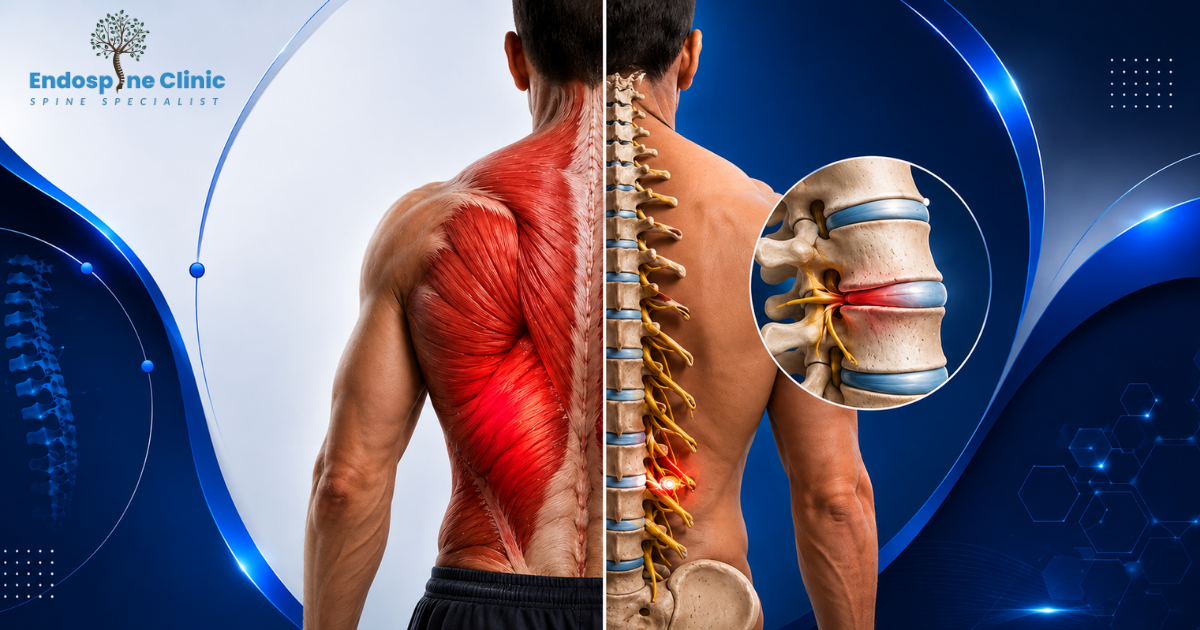
A muscle strain, commonly known as a “pulled muscle,” occurs when the muscle fibers or tendons in your back are stretched beyond their limits or torn.
This usually happens due to sudden movements, heavy lifting with poor form, or repetitive stress over time. The lower back is highly susceptible to strains because it supports the entire weight of your upper body and facilitates movement.
What is a Slipped Disc?
Your spine is made up of individual bones called vertebrae, and between each bone is a rubbery cushion known as a disc. These discs act as shock absorbers.
A “slipped disc” (medically known as a herniated or bulging disc) happens when the soft, jelly-like center of the disc pushes out through a tear in its tougher exterior casing. When this material bulges out, it can press against nearby sensitive spinal nerves, causing severe pain.
Muscle Strain vs Slipped Disc: The Ultimate Comparison
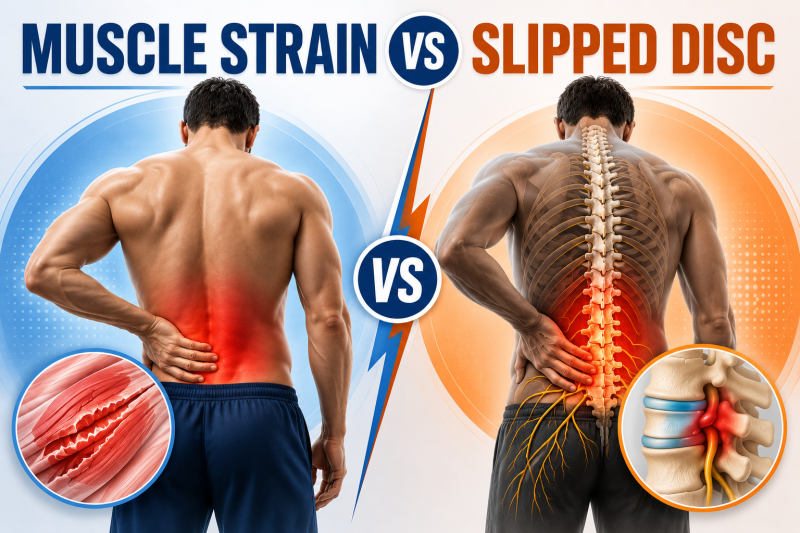
When evaluating a Muscle Strain vs Slipped Disc, the key lies in the type of pain, where it travels, and how long it lasts. Here is a quick comparison to help you analyze your symptoms.
1. The Type of Pain
-
Muscle Strain: The pain is usually described as a dull, constant ache. Your back may feel incredibly stiff, sore to the touch, and prone to sudden, tight spasms.
-
Slipped Disc: The pain is often described as sharp, shooting, electric, or burning. It feels less like an ache and more like a shock.
2. The Location of the Pain
-
Muscle Strain: The pain stays heavily localized. If you strained your lower back, the pain generally stays in your lower back. It rarely travels past the buttocks.
-
Slipped Disc: The pain radiates. Because the bulging disc is pressing on a nerve, the pain often travels down the path of that nerve, extending into your buttocks, thighs, calves, and even your toes.
3. Duration and Onset
-
Muscle Strain: Pain usually peaks within the first 24 to 48 hours after an injury and gradually begins to improve with rest over the next few days to weeks.
-
Slipped Disc: The pain can come on suddenly or develop gradually. Unlike a muscle strain, slipped disc pain rarely goes away entirely with just a few days of rest. It tends to be chronic and recurring.
7 Proven Signs Your Pain is a Slipped Disc
If your back pain involves a structural issue with your spine, your body will send specific warning signals. Here are the top signs you need to look out for.
1. The Pain Shoots Down Your Leg
This is the hallmark sign of a slipped disc. If the pain starts in your lower back but shoots down one side of your buttocks and travels down the back of your thigh and calf, you are likely experiencing sciatica, caused by a herniated disc.
2. You Feel Numbness or Tingling
Because a slipped disc compresses a nerve, it disrupts the signals between your brain and your limbs. You may feel a “pins and needles” sensation or complete numbness in your leg or foot.
3. Muscle Weakness
Nerve compression doesn’t just cause pain; it affects motor function. You might find it difficult to lift your foot, stand on your toes, or you may notice your leg giving out while walking.
4. Pain Worsens When Sitting
Sitting puts significantly more pressure on your spinal discs than standing or lying down. If your pain spikes every time you sit at your desk or drive your car, a slipped disc is highly likely.
5. Coughing or Sneezing Triggers Agony
Coughing, sneezing, or laughing increases the internal pressure in your abdomen and spinal canal. If a simple sneeze causes a sudden, sharp shock of pain in your back or leg, a disc issue is usually the culprit.
6. The Pain is Usually One-Sided
While it is possible for a slipped disc to press on nerves on both sides, it almost always protrudes to one side, causing pain in either your left or right leg, but rarely both equally.
7. Over-the-Counter Meds Don’t Help
If you have been taking standard muscle relaxants or basic painkillers and feeling absolutely no relief after several days, the pain is likely nerve-related, not muscular.
Top Signs Your Pain is Just a Muscle Strain
If you are hoping your back pain is simply a muscular issue, these are the symptoms that point in that direction.
1. Centralized, Local Ache
The pain is strictly contained to the area of your back that you injured. It doesn’t travel down your arms or legs.
2. Severe Muscle Spasms
Your back muscles might suddenly lock up or spasm involuntarily. This is your body’s defense mechanism, attempting to immobilize the area to prevent further damage.
3. Pain With Movement, Relief with Rest
If lying perfectly still on a flat, firm mattress makes the pain completely disappear, but bending or twisting brings it roaring back, you are likely dealing with a muscular strain.
4. Soreness to the Touch
If you can press your fingers into a specific spot on your back and feel tenderness or swelling, it is a strong indicator of a localized muscle or ligament tear.
Why Patients Choose Spine Treatment in Vadodara
For residents of Gujarat, dealing with severe back pain used to mean traveling long distances to metro cities like Mumbai or Delhi. Today, that has completely changed. Seeking spine treatment in Vadodara offers significant advantages for local patients.
World-Class Infrastructure Locally
Vadodara has rapidly emerged as a prominent healthcare hub. The city now hosts ultra-modern hospitals and specialized spine clinics equipped with advanced MRI machines and minimally invasive surgical tech.
Understanding the Local Lifestyle
A local spine specialist in Vadodara understands the specific lifestyle factors contributing to your back pain. Whether it is the physical toll of navigating daily traffic on two-wheelers through busy intersections like Alkapuri, or the ergonomic strain of long desk hours in the city’s growing IT and industrial sectors (like Makarpura GIDC), local doctors provide highly contextualized care.
Patient Accessibility and Comfort
When dealing with a slipped disc, traveling long distances is agonizing. Having the best spine surgeon in Vadodara nearby means you can undergo treatment and recover in the comfort of your own home environment. Family support is easily accessible, and post-treatment follow-ups are convenient and stress-free.
Trust Factors in the Region
Healthcare in Gujarat is heavily driven by trust and word-of-mouth. Spine specialists in Vadodara have built strong reputations over years of ethical practice, ensuring patients receive honest diagnoses rather than unnecessary surgical recommendations.
How a Spine Specialist Diagnoses Your Pain
If you are unsure whether you have a Muscle Strain vs Slipped Disc, guessing is dangerous. When you visit a specialist, here is exactly how they find the root cause.
The Physical Examination
Your doctor will check your back for tenderness, have you move in specific ways, and perform a straight-leg raise test. If raising your leg at a certain angle triggers shooting pain, it is a strong indicator of nerve compression.
Neurological Testing
The doctor will test your reflexes, muscle strength, and your ability to feel light touches or pinpricks on your skin.
Advanced Imaging
-
X-Rays: While X-rays cannot show a herniated disc, they rule out other causes like fractures or bone spurs.
-
MRI (Magnetic Resonance Imaging): This is the gold standard. An MRI provides a highly detailed 3D image of your spine, clearly showing the exact location of a slipped disc and which nerves are being compressed.
Effective Treatment Solutions and Recovery
Once the diagnosis is clear, a tailored treatment plan begins. Fortunately, whether it is a strain or a disc issue, the majority of patients recover without surgery.
Treating a Muscle Strain
-
Rest and Ice/Heat: Icing the area for the first 48 hours reduces inflammation. Switching to heat afterward promotes blood flow and healing.
-
Medications: Over-the-counter NSAIDs (like ibuprofen) and prescribed muscle relaxants help manage the spasms.
-
Gentle Movement: Complete bed rest for more than a day or two is discouraged. Gentle walking and stretching prevent the muscles from becoming weak and stiff.
Treating a Slipped Disc
-
Physical Therapy: Targeted exercises designed to take pressure off the pinched nerve and strengthen the core muscles supporting the spine.
-
Epidural Steroid Injections: If pain is severe, a specialist can inject anti-inflammatory medication directly into the spinal space to provide rapid relief.
-
Minimally Invasive Spine Surgery: If nerve compression causes profound weakness, loss of bowel control, or fails to heal after months of therapy, surgery might be necessary. Modern microdiscectomy procedures remove the bulging portion of the disc through a tiny incision, allowing patients to walk the same day.
The Benefits of Timely Spine Treatment
Ignoring severe back pain or masking it with painkillers is a dangerous game. Seeking prompt medical attention offers several critical benefits:
-
Prevents Permanent Nerve Damage: Prolonged compression from a slipped disc can lead to irreversible nerve damage and chronic weakness.
-
Faster Return to Normal Life: Early intervention means shorter recovery times. You get back to your job, your family, and your hobbies much faster.
-
Avoids Complex Surgeries: Catching a structural spinal problem early often means it can be managed with physiotherapy and medication. Delaying treatment increases the likelihood that surgery becomes the only viable option.
-
Improved Mental Health: Chronic pain is exhausting and deeply linked to anxiety and depression. Timely relief restores your overall quality of life.
Frequently Asked Questions (FAQs)
1. How long does a muscle strain usually take to heal? Most mild to moderate back muscle strains heal within 2 to 4 weeks with proper rest, ice/heat therapy, and gentle stretching. If your pain persists beyond a month, you should consult a spine specialist in Vadodara to rule out structural issues.
2. Can a muscle strain turn into a slipped disc? No, a muscle strain cannot magically transform into a slipped disc, as they involve entirely different parts of the body (muscles vs. spinal shock absorbers). However, severe muscle weakness from a strain can reduce support for your spine, making you slightly more vulnerable to a future disc injury.
3. Is walking good for a slipped disc? Yes, in most cases, short, gentle walks are highly beneficial. Walking stimulates blood flow and oxygen to the spine, aiding the healing process. However, you should avoid uneven surfaces and stop immediately if the shooting nerve pain worsens.
4. When should I immediately see the best spine surgeon in Vadodara? You should seek immediate emergency care if your back pain is accompanied by a sudden loss of bladder or bowel control, severe numbness in the groin/saddle area, or if your legs suddenly become too weak to hold your body weight. These are signs of a medical emergency called Cauda Equina Syndrome.
5. Are slipped discs completely curable? Yes. Through a combination of rest, physical therapy, and sometimes minimally invasive procedures, the vast majority of patients with a slipped disc achieve complete pain relief and return to full, active lives.
Conclusion & Next Steps
Figuring out the difference between a Muscle Strain vs Slipped Disc doesn’t have to be a guessing game. While a muscle strain brings localized, aching pain that fades with time, a slipped disc announces itself with sharp, shooting, nerve-based pain that demands attention.
Listening to your body is the first step. The second step is taking action. Do not let chronic back pain dictate how you live your life, restrict your movements, or steal your joy.
If you have been suffering for more than a few weeks, it is time to seek professional clarity. Stop relying on internet guesswork and temporary home remedies.
Ready to live pain-free? Book a consultation with the best spine surgeon in Vadodara today. A dedicated specialist will provide an accurate diagnosis, a personalized treatment plan, and the expert care you need to get back on your feet confidently. Contact our clinic now to schedule your comprehensive spine assessment.
