
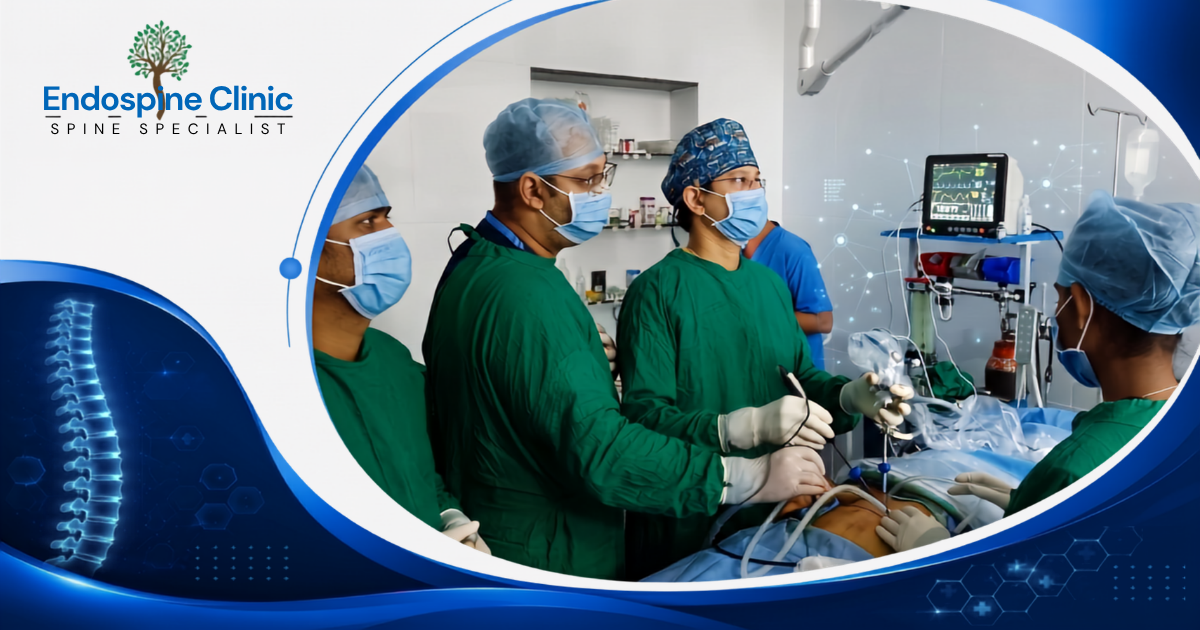
Understanding why navigation makes spine surgery safer is often the turning point for patients who are hesitant about undergoing back surgery. For decades, traditional open spine surgery relied heavily on the surgeon’s anatomical knowledge and tactile feel. However, the human spine is an incredibly complex structure housing the spinal cord, delicate nerve roots, and intricate blood vessels. A margin of error as small as a single millimeter can make a massive difference in a patient’s postoperative quality of life.
Today, medical technology has evolved dramatically. Advanced 3D imaging, real-time intraoperative tracking, and robotic assistance have revolutionized how spinal procedures are performed. If you are exploring your options for spine treatment in Vadodara or the broader Gujarat region, understanding the role of spinal navigation can help alleviate your fears and empower you to make informed medical decisions.
This comprehensive guide will explore the exact mechanics of surgical navigation, compare it directly to traditional methods, detail the life-changing benefits, and explain why choosing a tech-equipped spine specialist in Vadodara is your best path forward.
Table of Contents
-
What is Spinal Navigation Technology?
-
Traditional Freehand vs. Navigated Spine Surgery: A Direct Comparison
-
5 Vital Reasons Why Navigation Makes Spine Surgery Safer
-
Common Symptoms That May Require Advanced Spine Surgery
-
The Step-by-Step Navigated Spine Treatment Journey
-
How to Choose the Best Spine Surgeon in Vadodara
-
Frequently Asked Questions (FAQs)
-
Conclusion & Next Steps
What is Spinal Navigation Technology?
Spinal navigation technology acts much like the GPS system in your car, but designed for the human body. Before navigation systems existed, surgeons relied on pre-operative X-rays or MRI scans to plan the surgery. Once inside the operating room, they had to mentally map those 2D images onto the patient’s actual 3D anatomy.
Navigation technology removes this guesswork. Using sophisticated intraoperative imaging (such as the O-arm system) combined with specialized computer software, the surgeon creates a highly detailed, real-time 3D map of the patient’s spine while they are on the operating table.
Specialized surgical instruments are equipped with tracking markers. High-resolution cameras in the operating room track these markers, superimposing the exact location of the instrument onto the 3D map of the spine displayed on a monitor. This allows the surgeon to see exactly where their instruments are relative to the patient’s nerves, discs, and bone structure at every single second of the procedure.
This real-time feedback loop is the core reason why navigation makes spine surgery safer. It allows for microscopic adjustments and flawless implant placement, ultimately protecting the spinal cord from accidental trauma.
Traditional Freehand vs. Navigated Spine Surgery: A Direct Comparison
To truly appreciate the advancements in modern medicine, it is helpful to contrast how spine surgeries used to be performed with how they are performed today in advanced medical hubs across Gujarat.
The Traditional Freehand Approach
In a traditional open spine surgery, the surgeon makes a long incision down the back and physically strips the muscles away from the spine to get a clear line of sight. They rely heavily on their anatomical knowledge and intraoperative fluoroscopy (repeated X-rays) to guide the placement of screws, rods, or cages.
-
The Drawback: This method involves significant muscle disruption, high radiation exposure from continuous X-rays, and a higher risk of human error when placing hardware near delicate nerves.
The Navigated and Robotic Approach
In a navigated procedure, the extensive muscle stripping is completely unnecessary. Because the surgeon can “see” through the tissue via the 3D monitor, they can perform the operation through tiny, minimally invasive keyhole incisions.
-
The Advantage: The technology provides a virtual roadmap. The surgeon plans the perfect trajectory for a screw on the computer, and the navigation system guides their hand (or a robotic arm) to execute that exact trajectory.
Quick Comparison
| Feature | Traditional Spine Surgery | Navigated Spine Surgery |
|---|---|---|
| Incision Size | Large (Often 4 to 6 inches or more) | Small (Keyhole incisions, often under 1 inch) |
| Muscle Damage | Significant muscle stripping required | Muscles are gently separated, not cut |
| Accuracy Rate | ~85% to 90% for hardware placement | Upwards of 98% to 99% precision |
| Radiation Exposure | High (for both patient and surgical team) | Extremely Low (often a single initial scan) |
| Hospital Stay | 4 to 7 days on average | 1 to 3 days (sometimes outpatient) |
| Recovery Time | Several months of intensive rehab | Weeks, with a much faster return to work |
Understanding this comparison clearly highlights the immense value of seeking out the best spine surgeon in Vadodara who utilizes these advanced technological platforms.
5 Vital Reasons Why Navigation Makes Spine Surgery Safer
Let’s dive deeply into the specific clinical benefits that explain exactly why navigation makes spine surgery safer for patients of all ages.
- Unprecedented Precision in Implant Placement
- Dramatic Reduction in Radiation Exposure
- Minimally Invasive Capabilities
- Customization for Complex Deformities
- Lower Revision Rates
Common Symptoms That May Require Advanced Spine Surgery
Not all back pain requires surgery. In fact, most spine issues resolve with physical therapy, medications, or targeted injections. However, if you are experiencing the following red-flag symptoms, it may be time to consult a spine specialist in Vadodara to discuss advanced surgical options:
-
Radiating Nerve Pain: Sharp, shooting pain that travels down your buttocks and into your legs (sciatica), or down your arms.
-
Progressive Numbness: A loss of sensation, tingling, or a “pins and needles” feeling in your extremities.
-
Muscle Weakness: Difficulty lifting your foot (foot drop), stumbling while walking, or losing grip strength in your hands.
-
Loss of Bowel or Bladder Control: This is a medical emergency known as Cauda Equina Syndrome and requires immediate surgical intervention.
-
Chronic Pain Unresponsive to Conservative Care: Severe back or neck pain that persists for more than three to six months despite rigorous physical therapy and medication.
If you are suffering from any of these debilitating symptoms, do not wait for irreversible nerve damage to occur.
The Step-by-Step Navigated Spine Treatment Journey
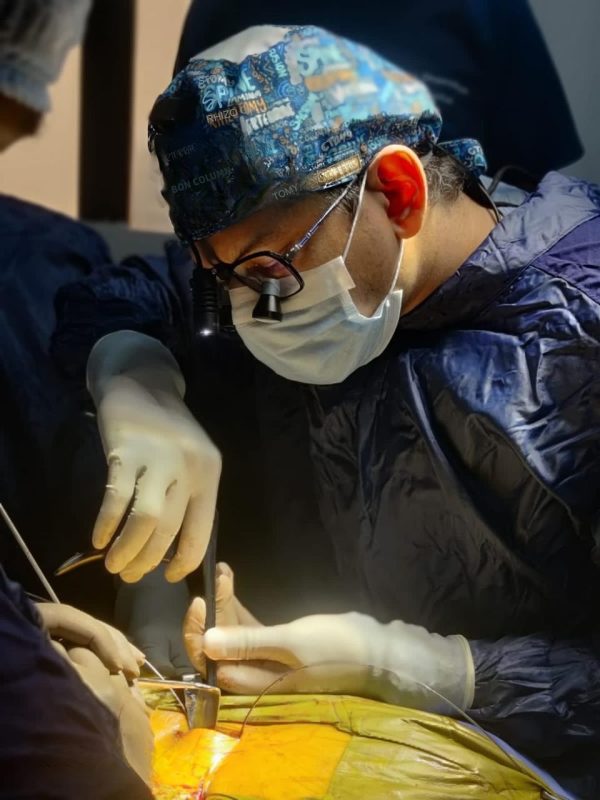
If you choose to undergo spine treatment in Vadodara using navigation technology, knowing what to expect can significantly reduce your pre-surgery anxiety. Here is the typical patient journey:
Step 1: Pre-Operative Planning
Your surgeon will order detailed MRI and CT scans. These images are loaded into specialized planning software. The surgeon effectively performs a “virtual surgery” on the computer, determining the exact size of the implants needed and mapping out the safest trajectories before you even enter the operating room.
Step 2: Intraoperative Registration
Once you are asleep in the operating room, an advanced imaging device (like an O-arm) takes a rapid 3D scan of your spine. The computer merges this real-time scan with your pre-operative plan, creating a flawless, updated map of your anatomy.
Step 3: The Navigated Procedure
Through small keyhole incisions, the surgeon introduces their instruments. The navigation monitor displays the instrument’s exact position relative to your spinal cord and nerves. The surgeon follows the pre-planned pathways, placing screws and cages with total confidence and zero guesswork.
Step 4: Final Verification
Before closing the small incisions, the surgeon takes one final 3D spin using the O-arm. This verifies that all hardware is perfectly placed and the spine is properly aligned. Once confirmed, the incisions are closed using dissolving stitches or surgical glue.
How to Choose the Best Spine Surgeon in Vadodara
Having access to state-of-the-art technology is only half the battle; you also need a master to wield it. When looking for the best spine surgeon in Vadodara, consider the following criteria:
-
Fellowship Training: Ensure the surgeon has completed a dedicated fellowship specifically in complex spine surgery, not just general orthopedics.
-
Technological Proficiency: Ask directly if they use intraoperative navigation, O-arm imaging, or robotic assistance in their practice.
-
Minimally Invasive Focus: Look for a surgeon who prioritizes minimally invasive techniques and motion-preserving surgeries over traditional large-open fusions whenever possible.
-
Hospital Infrastructure: The surgeon must operate out of a hospital equipped with a modern modular operating theater, advanced ICUs, and a dedicated spine rehabilitation team. Vadodara is home to several top-tier multi-specialty hospitals that boast this level of infrastructure.
-
Patient Testimonials: Read reviews and speak to former patients about their surgical outcomes and postoperative care experiences.
Frequently Asked Questions (FAQs)
1. Does navigated spine surgery guarantee zero complications? While navigation technology significantly drastically reduces the risks associated with hardware misplacement and nerve damage, no surgery is entirely risk-free. Risks such as anesthesia reactions or minor infections still exist, but navigation makes the structural aspects of the surgery remarkably safe.
2. Is spine treatment in Vadodara as advanced as in metro cities like Mumbai or Delhi? Absolutely. Top hospitals in Vadodara are equipped with the exact same robotic and O-arm navigation systems found in top-tier global medical centers. You do not need to travel far to receive world-class, technologically advanced spinal care.
3. Am I too old to benefit from navigated spine surgery? Age is rarely a strict barrier. In fact, because navigated minimally invasive surgery results in less blood loss and shorter anesthesia times, it is exceptionally beneficial for elderly patients who might not be strong enough to withstand the trauma of traditional open spine surgery.
4. Will the metal implants used in my spine set off airport security alarms? Modern spinal implants are made from high-grade medical titanium or specialized PEEK plastics. While titanium rarely sets off standard metal detectors, modern full-body scanners may detect them. Your spine specialist in Vadodara can provide you with an implant card to carry in your wallet when traveling.
Conclusion & Next Steps
Deciding to undergo spinal surgery is a major life event. However, the days of relying solely on guesswork and massive incisions are long gone. Understanding why navigation makes spine surgery safer gives you the knowledge to advocate for your own health. The combination of brilliant surgical expertise and real-time 3D navigation ensures that your spinal cord is protected, your recovery is accelerated, and your outcome is predictable.
Living with chronic back pain or progressive nerve damage steals your independence and joy. You deserve to live a vibrant, pain-free life. If you are exploring your options for advanced spine treatment in Vadodara, do not settle for outdated methods.
Take control of your spinal health today. If you or a loved one are suffering from debilitating back or neck issues, consult with an expert who leverages the power of modern navigation technology.
